


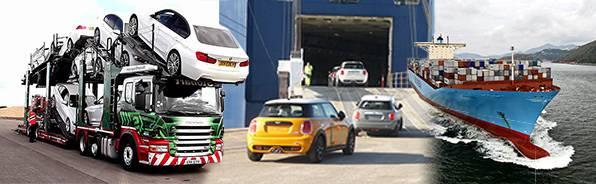
Look around. The device you're reading this on, the chair you're sitting in, the clothes you're wearing—there's a very high probability that at least one of these items, or their components, spent part of its journey inside a large, corrugated steel box. The humble shipping container is one of the most pivotal, yet overlooked, inventions of the 20th century. It is the very backbone of our globalized world, a simple tool that revolutionized trade, logistics, and even architecture.
This article will dive deep into the world of shipping containers, exploring their history, their standard sizes, their primary purpose in global shipping, and the incredibly innovative second lives they are being given.
A Brief History: The Invention That Shrank the World
Before the 1950s, Shipping Container goods was a labor-intensive, time-consuming, and costly nightmare. Cargo of all shapes and sizes was manually loaded and unloaded from ships in a process known as "break-bulk" shipping. This method was notoriously inefficient, prone to theft (a problem called "pilferage"), and required ships to spend weeks in port.
The solution came from an American trucking magnate named Malcolm McLean. He envisioned a system where a truck's trailer could be detached from its chassis, loaded directly onto a ship, and then re-attached to another chassis at its destination. In 1956, his idea became a reality when the first container ship, the Ideal-X, set sail from Newark to Houston. This simple concept of intermodalism—the ability to transport a container seamlessly across ships, trucks, and trains without handling the cargo inside—was nothing short of revolutionary.
Standardization is Key: The Anatomy of a Box
The true genius of McLean's invention wasn't just the container itself, but its standardization. For the system to work globally, every container, ship, port crane, and truck chassis had to be compatible.
The most common types and sizes you'll encounter are:
-
Standard Dry Containers: These are the workhorses of the industry, fully enclosed and weatherproof.
-
20-foot Container: Often called a Twenty-foot Equivalent Unit (TEU), it's the industry's standard measure. It's roughly 20' long x 8' wide x 8.5' tall.
-
40-foot Container: Known as a Forty-foot Equivalent Unit (FEU), this is the most common size. It's 40' long x 8' wide x 8.5' tall.
-
High Cube Containers: A popular variant, these are one foot taller than standard containers, standing at 9.5 feet. This extra space is crucial for lightweight but voluminous cargo.
-
-
Specialized Containers: To handle all types of goods, several specialized containers were developed:
-
Reefer Containers: Insulated containers with their own refrigeration unit, used for perishable goods like food and pharmaceuticals.
-
Open-Top Containers: Feature a removable tarpaulin roof instead of a solid one, allowing for the loading of oversized cargo from the top.
-
Flat-Rack Containers: Have collapsible sides, perfect for heavy machinery, vehicles, or irregularly shaped items.
-
Tank Containers: Essentially large drums inside a frame, used for transporting liquids and gases.
-
The Lifeblood of Global Trade: How Container Shipping Works
The journey of a single container is a marvel of modern logistics. It begins when a manufacturer or exporter packs their goods and secures them inside the container—a process called stuffing. The container is then transported by truck to a port, where a massive gantry crane lifts it from the chassis and stacks it neatly onto a container ship.
These modern vessels are engineering marvels, capable of carrying over 24,000 TEUs. They are like floating cities of steel, meticulously organized with complex software tracking every single box. Upon reaching its destination port, the process reverses: the container is unloaded, goes through customs, and is placed on another truck or train for the final leg of its journey to an importer's warehouse, where it is unstuffed.
This efficient, standardized system has made it economically feasible to manufacture goods on one continent and sell them on another, fundamentally shaping our modern consumer world.
A Second Life: The Rise of Container Architecture
When a shipping container reaches the end of its sea-faring life (typically after 10-15 years of hard service), it doesn't just get scrapped. A vibrant and creative secondary market has emerged, giving these robust steel boxes a new purpose.
Container architecture has become a global phenomenon, prized for its sustainability, affordability, and modularity. You can now find containers transformed into:
-
Homes and Housing: From sleek, modern single-family homes to multi-story apartment complexes and quick-deployment housing for disaster relief.
-
Pop-Up Shops and Cafes: Their portability and eye-catching industrial aesthetic make them perfect for temporary retail spaces and trendy restaurants.
-
Office Spaces and Workspaces: Many businesses use converted containers as onsite offices, studios, or coworking spaces.
-
Swimming Pools: A growing trend where a container is modified, lined, and filtered to create a stylish and compact pool.
-
Emergency and Mobile Units: They are easily converted into mobile medical clinics, testing labs, sanitation units, and command centers.
Considering a Container? Key Factors to Ponder
If you're thinking of buying a used shipping container for storage or a project, here's what to look for:
-
Condition: Containers are graded (e.g., "Wind and Water Tight" or "One-Trip"). A "one-trip" container is like new, while a "WWT" is older but still structurally sound for storage.
-
Price: Costs vary based on size, condition, and location. A standard 40-foot container will cost more than a 20-foot one.
-
Modification: While they are modular, cutting into the steel requires reinforcing the structure to maintain its integrity. Always consult a professional for major modifications.
-
Location and Delivery: Ensure you have adequate space and the right access for a delivery truck. The container will typically be dropped off using a specialized truck with a tilting chassis.
Conclusion: The Unsung Hero of Modern Civilization
From carrying the fruits of international commerce across oceans to providing the building blocks for innovative and sustainable living, the shipping container is a testament to the power of a simple, brilliant idea. It is more than just a corrugated metal box; it is a symbol of connection, efficiency, and human ingenuity. The next time you see one—whether on the back of a truck, stacked high on a ship, or as the facade of your local coffee shop—take a moment to appreciate the vast, interconnected world it represents.

 English
 Arabic
 French
 Spanish
 Portuguese
 Deutsch
 Turkish
 Italiano
 Russian
 Romaian
 Portuguese (Brazil)
 Tiếng Việt