


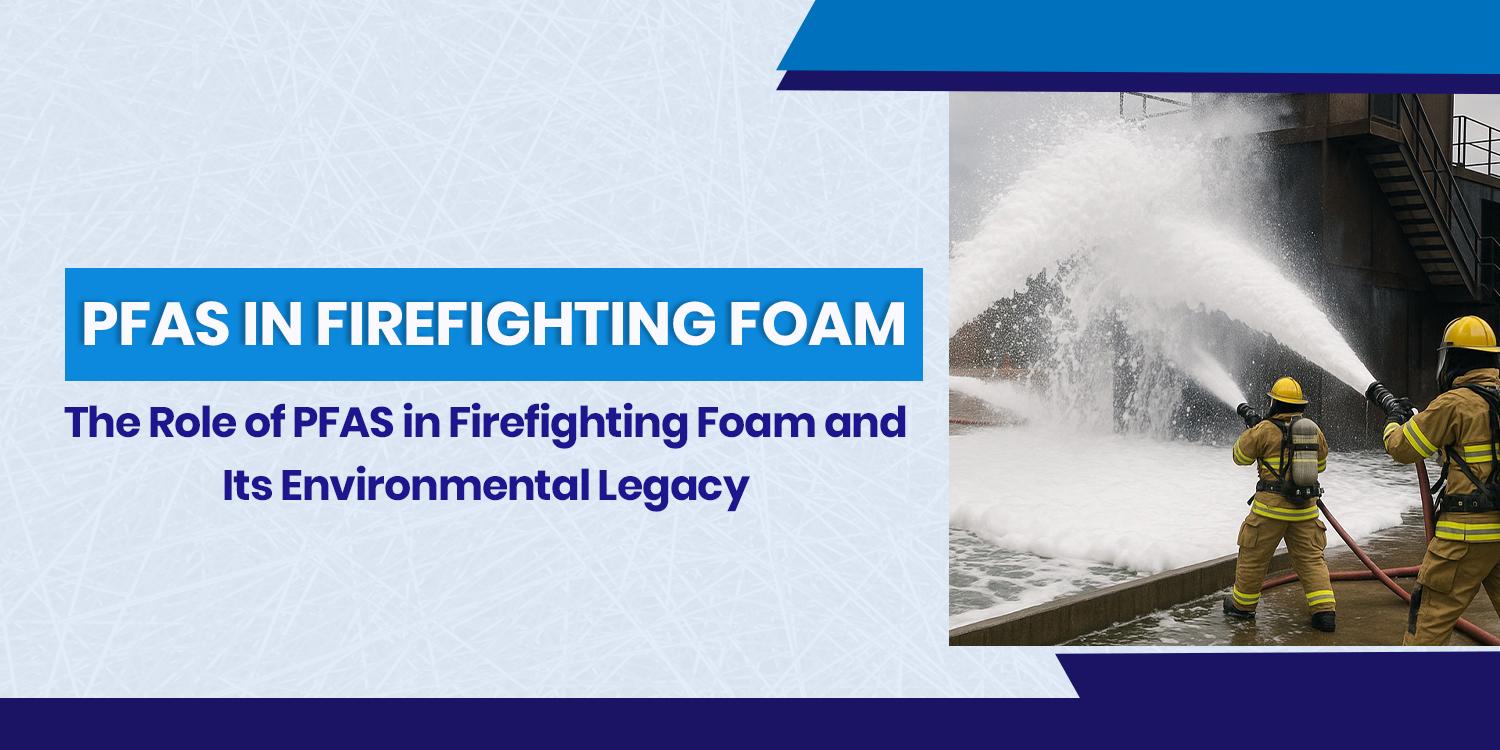
You’ve probably heard of PFAS in the newsoften referred to as "forever chemicals." But what are they, really? PFAS, short for per- and polyfluoroalkyl substances, are synthetic chemicals used in countless products for their heat resistance, water repellence, and non-stick qualities. They’re in everything from nonstick pans to waterproof jackets.
One of the most significant and troubling uses of PFAS is in firefighting foam. While incredibly effective at smothering dangerous fuel fires, PFAS in firefighting foam has left behind a long-lasting environmental legacy. At Matregenix, we’re committed to educating the public and working toward safer, smarter solutions in material science.
The Science Behind PFAS in Firefighting Foam
Firefighting foam, especially aqueous film-forming foam (AFFF), relies on PFAS to form a thin, heat-resistant barrier between the fire and the air. This film rapidly cools the fire and suppresses vapors, making it extremely effective at tackling high-intensity flammable liquid fires think jet fuel or oil tankers.
PFAS compounds make this possible because of their unique carbon-fluorine bonds—the strongest in organic chemistry. These bonds don’t break down easily in nature, earning PFAS their infamous nickname: “forever chemicals.”
Unfortunately, that same durability means they accumulate over time in the soil, in water, and even in our bodies.
A Looming Environmental Crisis
The environmental impact of PFAS in firefighting foam is no longer just a theoretical concern. It’s a real, widespread issue. Airports, military bases, industrial sites, and fire training facilities have used AFFF for decades. And when this foam is sprayed, it doesn’t stay in one place. PFAS leach into groundwater, rivers, and local ecosystems.
One of the most concerning issues is bioaccumulation. PFAS don't just pass through living organisms they build up over time. Fish, livestock, and even humans exposed to contaminated water can accumulate dangerous levels of these chemicals.
In many communities, PFAS levels in drinking water now exceed the safe limits recommended by the U.S. Environmental Protection Agency (EPA). This has sparked lawsuits, water treatment overhauls, and serious health concerns.
Health Impacts of PFAS Exposure
Scientific studies have linked PFAS exposure to a litany of health problems. These include:
-
Thyroid disorders
-
Immune system suppression
-
Liver damage
-
Developmental delays in children
-
Increased cholesterol levels
-
Kidney and testicular cancer
While research is ongoing, the evidence so far is enough to raise red flags globally. The persistence of PFAS in firefighting foam means that even decades-old contamination can still affect people today.
Regulatory Response and Phase-Out Efforts
Thankfully, awareness is growing. Governments and environmental agencies worldwide are moving to restrict or ban the use of PFAS-containing foams. In the U.S., the Department of Defense has committed to phasing out AFFF by 2024, and many state legislatures have passed laws limiting PFAS use in firefighting and consumer products.
The EPA has also introduced PFAS Action Plans and proposed maximum contaminant levels (MCLs) for drinking water. The push for non-PFAS alternatives is gaining momentum.
At Matregenix, we applaud these steps and support further innovations in chemical safety and environmental stewardship.
Are There Alternatives to PFAS in Firefighting Foam?
Yes and they’re getting better every year.
Researchers and manufacturers are developing fluorine-free firefighting foams (F3) that match the performance of traditional AFFF without the environmental drawbacks. These alternatives use biodegradable surfactants and don’t persist in soil or water.
While F3 solutions may not yet be suitable for every scenario, particularly in military or aviation contexts, they offer a much-needed path forward. Continued research and regulatory incentives are speeding up adoption across the globe.
At Matregenix, our focus on advanced nanofiber technologies and sustainable material science complements these efforts, and we aim to support safer, cleaner innovations across all industries.
The Role of Industry in Cleanup and Accountability
PFAS contamination isn’t just a scientific or regulatory issue it’s an ethical one. Companies that manufacture or use PFAS in firefighting foam have a responsibility to participate in cleanup and remediation.
Remediation technologies are also evolving. Traditional water treatment methods don’t work well on PFAS, but promising new techniques like activated carbon filtration, ion exchange resins, and nanofiltration membranes are proving effective.
Matregenix is actively exploring nanomaterials that can contribute to these cleanup efforts, offering hope for communities grappling with PFAS pollution.
Conclusion: A Legacy We Must Address
The story of PFAS in firefighting foam is a sobering example of how technological convenience can come at a long-term cost. While firefighting foams have saved lives and property, their environmental and health impacts can’t be ignored.
The good news? Solutions are on the horizon.
By prioritizing research, embracing safer alternatives, and holding polluters accountable, we can mitigate the environmental legacy of PFAS and protect future generations.
At Matregenix, we're committed to being part of that solution driving innovation in materials science for a cleaner, healthier tomorrow.
Final Thoughts
As the world learns more about PFAS, especially their use in firefighting foam, we face a critical choice: continue with outdated, harmful technologies or pivot toward sustainable innovation. The latter path won’t be easy, but it’s the only one that leads to lasting safety and environmental justice.
If you want to learn more about our work at Matregenix and how we're addressing PFAS-related challenges through nanotechnology, visit our website or contact us today.

 English
 French
 Spanish
 Portuguese
 Deutsch
 Turkish
 Dutch
Dutch
 Italiano
 Russian
 Romaian
 Portuguese (Brazil)
 Tiếng Việt