


Introduction
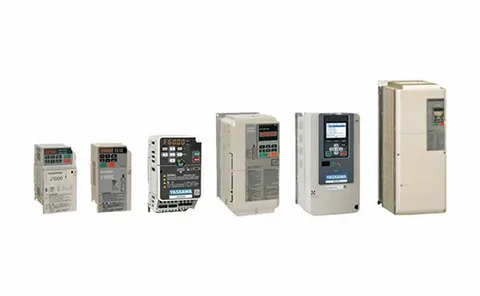
AC drives, also known as variable frequency drives (VFDs) or adjustable speed drives (ASDs), are electronic devices that control the speed, torque, and direction of alternating current (AC) motors. By adjusting the frequency and voltage supplied to motors, AC drives enhance energy efficiency, extend equipment life, and improve process control. They are widely used across industries including HVAC, oil & gas, water & wastewater, power generation, manufacturing, mining, and transportation. With increasing emphasis on energy savings, automation, and sustainability, the global AC drives market is witnessing strong growth.
Market Dynamics (Drivers, Challenges, Opportunities)
Drivers: Rising energy costs and strict government regulations on energy efficiency are major growth drivers. AC drives reduce power consumption significantly in motor-driven systems, which account for nearly 50% of industrial electricity usage. Industrial automation, smart factories, and the growing adoption of electric vehicles also fuel demand. Infrastructure development and urbanization further increase usage in HVAC systems, water supply networks, and building management systems.
Challenges: High upfront installation costs and technical complexity can limit adoption, especially in cost-sensitive industries. Integration of AC drives with existing legacy systems sometimes poses compatibility issues. Harmonic distortion, electromagnetic interference, and maintenance requirements are other technical challenges. Additionally, global semiconductor shortages and supply chain disruptions impact AC drive production and delivery.
Opportunities: The rapid expansion of renewable energy projects, particularly wind and solar, creates opportunities for AC drives in power conversion and grid integration. IoT-enabled smart drives with predictive maintenance features offer strong growth potential. Emerging economies present lucrative markets due to ongoing industrialization, infrastructure projects, and urban expansion. There are also opportunities in retrofitting older motor systems with modern energy-efficient AC drives.
Market Segmentation
By Power Rating: Low power drives (<40 kW), medium power drives (41–200 kW), and high power drives (>200 kW). Low and medium power drives dominate applications in HVAC, pumps, fans, and conveyors, while high power drives are critical in heavy industries.
By Voltage: Low-voltage AC drives (up to 690V) and medium-voltage AC drives (above 690V). Low-voltage drives dominate in general industries, while medium-voltage drives are used in oil & gas, mining, and marine sectors.
By Application: Pumps, fans, compressors, conveyors, HVAC, elevators, cranes, and wind turbines.
By End-Use Industry: Oil & gas, water & wastewater, power generation, automotive, chemicals, mining & metals, food & beverage, building automation, marine, and renewable energy.
By Region: Asia-Pacific, North America, Europe, Latin America, Middle East & Africa.
Regional Analysis
Asia-Pacific leads the global AC drives market, fueled by rapid industrialization, urbanization, and infrastructure investments. China, India, Japan, and South Korea are the largest contributors. Demand is driven by manufacturing expansion, water treatment, and renewable energy projects. Europe emphasizes energy efficiency regulations such as the EU’s Ecodesign Directive, making it a strong market for advanced AC drives. Germany, France, and Italy are key contributors. North America sees robust demand from oil & gas, HVAC, and water & wastewater industries, with the U.S. leading adoption. Latin America and Middle East & Africa are emerging regions, with growth driven by energy efficiency projects, oil & gas exploration, and urban infrastructure development.
Key Trends
- Energy efficiency focus: AC drives are central to global energy-saving initiatives, reducing operational costs and emissions.
- IoT and smart integration: Next-generation drives feature built-in sensors, connectivity, and predictive analytics.
- Renewable energy adoption: AC drives play a vital role in integrating solar, wind, and hybrid power systems with grids.
- Electrification of transport: Increasing usage in electric vehicles, railways, and marine propulsion systems.
- Compact and modular designs: Smaller, more efficient AC drives support integration in constrained industrial and commercial spaces.
- Retrofit market growth: Replacement of older fixed-speed motors with modern AC drive systems is rising rapidly.
Future Outlook
The future of the AC drives market looks promising, with strong growth expected in energy efficiency retrofits, automation, and renewable integration. Smart and connected drives with IoT capabilities will gain traction, enabling industries to optimize operations and reduce downtime. Asia-Pacific will remain the dominant region due to large-scale manufacturing and infrastructure development, while Europe and North America will drive premium demand with advanced energy-efficient solutions. The market will also see opportunities in emerging sectors such as smart buildings, electric mobility, and hybrid renewable systems.
Conclusion
AC drives are transforming industrial efficiency by controlling motor performance while reducing energy consumption. Their importance in automation, HVAC, water management, and renewable energy makes them essential across industries. With trends like IoT integration, compact designs, and renewable adoption, the AC drives market is positioned for sustained growth. Challenges such as high costs and technical complexities persist, but innovation and global sustainability initiatives ensure strong demand in the future.

 English
 Arabic
 French
 Spanish
 Portuguese
 Turkish
 Dutch
Dutch
 Italiano
 Russian
 Romaian
 Portuguese (Brazil)
 Tiếng Việt