


Financial reporting has always been a double-edged sword. On one hand, it provides businesses and professionals with the insights they need to make decisions. On the other, it is time-consuming, prone to errors, and often frustrating. If you’ve ever spent hours wrestling with reconciliations, consolidations, or compliance statements, you already know the pain. The good news? Smart automation is rewriting the story of financial reporting.
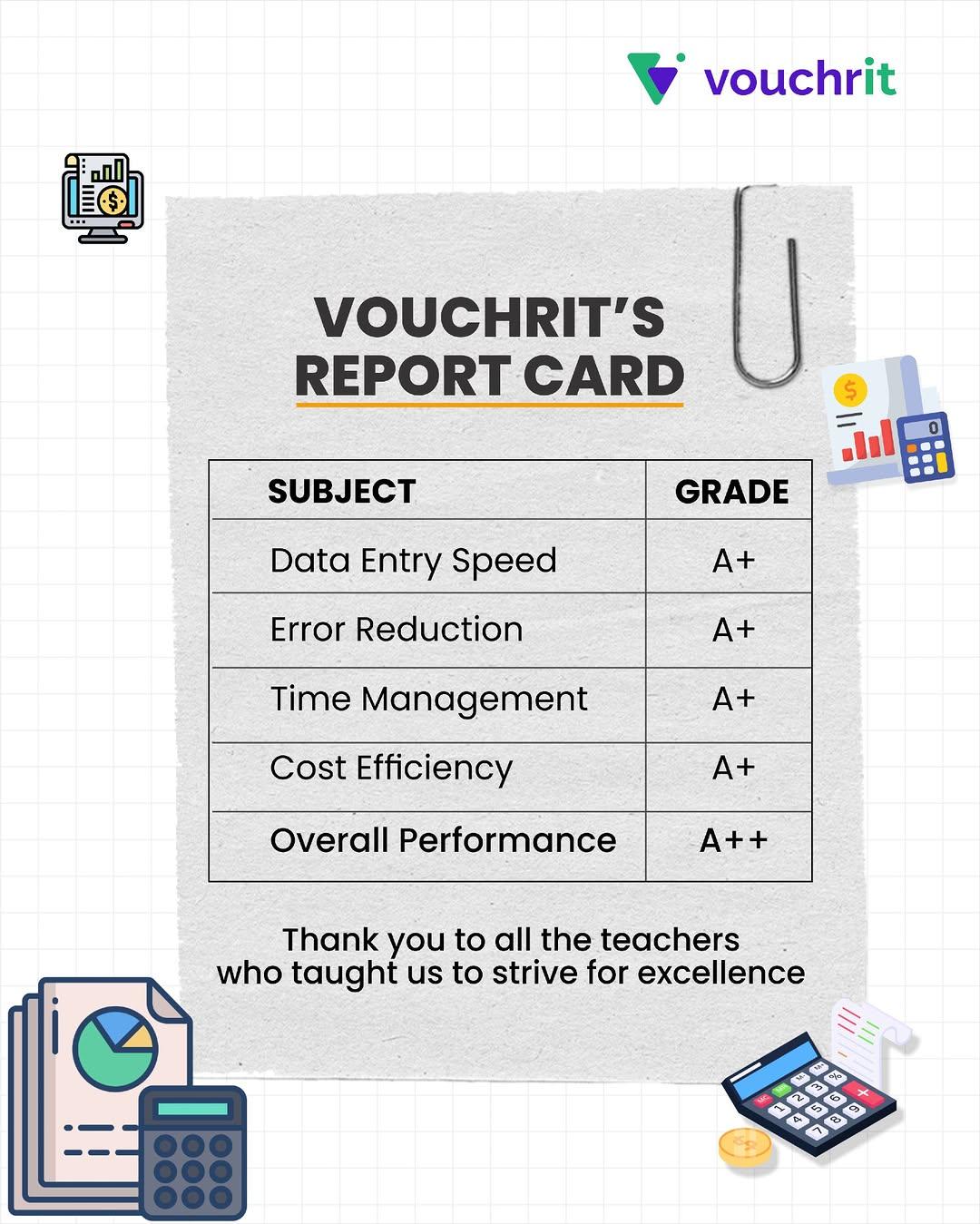
With platforms like VouchrIt, accounting professionals are cutting 90% of their data entry work, achieving near-perfect accuracy, and reclaiming valuable hours that can be reinvested in strategic growth. But how exactly does automation transform this messy, complicated process into a streamlined workflow? Let’s explore 13 ways smart automation simplifies financial reporting — and why it matters for you, me, and every business striving for efficiency.
1. How does automation eliminate manual data entry struggles?
The most obvious headache in reporting is repetitive data entry. Every misplaced digit has the potential to derail financial statements. Smart automation steps in by directly syncing with Tally and other accounting software to capture, classify, and record transactions without human input.
For instance, instead of typing in 500 vendor invoices manually, automation can process them in bulk, validate details against rules, and post them instantly. You save time, reduce errors, and eliminate the fatigue that often leads to compliance issues.
2. Why is reconciliation faster with intelligent tools?
Bank reconciliations, GST input credits, or vendor account reconciliations often take hours or even days. Smart automation uses AI to match transactions line by line across bank feeds, ledgers, and invoices in seconds.
Imagine reconciling a year’s worth of statements in minutes rather than days. That’s not just a productivity boost—it’s a complete mindset shift where reconciliation no longer feels like a burden but a routine checkpoint.
3. How does automation improve compliance reporting?
Every CA or accountant knows compliance deadlines are unforgiving. Miss one and penalties pile up. Smart automation helps by flagging anomalies in real time, auto-generating compliance-ready formats, and ensuring updates match regulatory changes.
For example, GST filings often require cross-verification of purchase and sales registers. Automation ensures this check is completed accurately, reducing the risk of mismatches that cause audit triggers.
4. What role does automation play in consolidation of accounts?
If you manage multi-branch or multi-subsidiary operations, consolidation can be a nightmare. Different formats, currencies, and timelines add layers of complexity. Automation resolves this by standardizing reporting templates, consolidating across geographies, and adjusting for currency conversions instantly.
No more hunting for missing data or struggling with version control. Instead, you get consolidated reports at the click of a button.
5. How do smart tools guarantee accuracy in financial processing?
Errors are costly. They affect decision-making, create distrust, and often trigger audits. Automation platforms like VouchrIt maintain 99.9% accuracy in processing financial data by following strict validation protocols.
Think of it as having an AI-powered auditor working behind the scenes—checking every voucher, every ledger entry, and every mismatch—so you don’t have to.
6. Can automation really save time for accountants?
Yes, and the numbers speak for themselves. VouchrIt users report up to 90% time saved on routine data entry. That means tasks which previously required 10 hours can now be done in just 1.
This isn’t just about time—it’s about energy. Instead of burning out on monotonous work, accountants can focus on advising clients, tax planning, and identifying growth opportunities.
7. How does automation help in generating real-time reports?
Traditional reporting often lags weeks behind real financial activity. Automation solves this by linking live data feeds to dashboards and generating real-time reports.
Want to see your P&L at 2 PM today, including transactions up to 1:59 PM? Automation makes that possible. Decision-making becomes sharper because you’re working with facts, not outdated snapshots.
8. Why is data security stronger with automated systems?
Handling sensitive financial data comes with enormous responsibility. Manual processes expose data to risks like mishandling or unauthorized access. Platforms like VouchrIt prioritize end-to-end encryption, secure integrations, and compliance with global data standards.
For clients, this builds trust. For you, it ensures peace of mind knowing financial data is protected at every step.
9. How does automation simplify audit preparation?
Audit seasons are often chaotic—rushing to gather ledgers, reconcile mismatches, and justify every transaction. Smart automation makes audits smoother by organizing data systematically, tagging transactions, and keeping detailed logs of changes.
When auditors arrive, instead of stacks of files, you can present neatly structured reports and digital trails that speak for themselves.
10. How can automation handle multi-currency transactions?
Global businesses face another hurdle: multi-currency reporting. Exchange rate adjustments and currency conversions often lead to inaccuracies. Automation addresses this by applying live exchange rates, consolidating global transactions, and producing uniform financial statements.
This not only saves time but also ensures accuracy when presenting reports to stakeholders spread across borders.
11. Why is automation crucial for cash flow reporting?
Cash flow is the lifeline of any business, yet manual tracking often overlooks small but significant outflows. Smart tools help by categorizing inflows and outflows automatically, highlighting cash leaks, and projecting future liquidity scenarios.
With this visibility, you don’t just report cash flow—you control it.
12. How do automated tools empower strategic decision-making?
Once routine reporting is handled, professionals are freed to focus on value-added analysis. Automation provides insight-driven dashboards that highlight trends, anomalies, and growth opportunities.
For example, instead of just reporting expenses, the system can show which department overspends regularly or which clients delay payments most often. That’s the kind of intelligence that fuels smart decisions.
13. What makes VouchrIt different from other automation solutions?
Plenty of tools promise automation, but few deliver with the depth and security of VouchrIt. Here’s why:
-
Seamless Tally Integration: Works natively, no steep learning curve.
-
AI-First Approach: Built around intelligent automation, not just buzzwords.
-
User-Centric Design: Intuitive enough for non-technical professionals.
-
Security & Compliance First: Financial data is always safeguarded.
With over 20 million vouchers processed, 12,000+ trusted CAs and accountants, and 90% time savings reported, VouchrIt is redefining what financial reporting looks like.
Final Thoughts
Complex financial reporting no longer has to drain your time, energy, or sanity. Automation has arrived—not as a distant promise but as a practical solution available today.
By eliminating manual errors, saving hours, securing data, and empowering strategic growth, smart automation is changing the way we think about accounting. Platforms like VouchrIt aren’t just tools; they’re companions for professionals who want to move beyond spreadsheets and focus on what truly matters: driving business forward.
So the real question is—are you ready to transform your reporting process and join the 10,000+ professionals who already trust automation to do the heavy lifting?

 English
 Arabic
 French
 Spanish
 Portuguese
 Deutsch
 Turkish
 Dutch
Dutch
 Russian
 Romaian
 Portuguese (Brazil)
 Tiếng Việt