


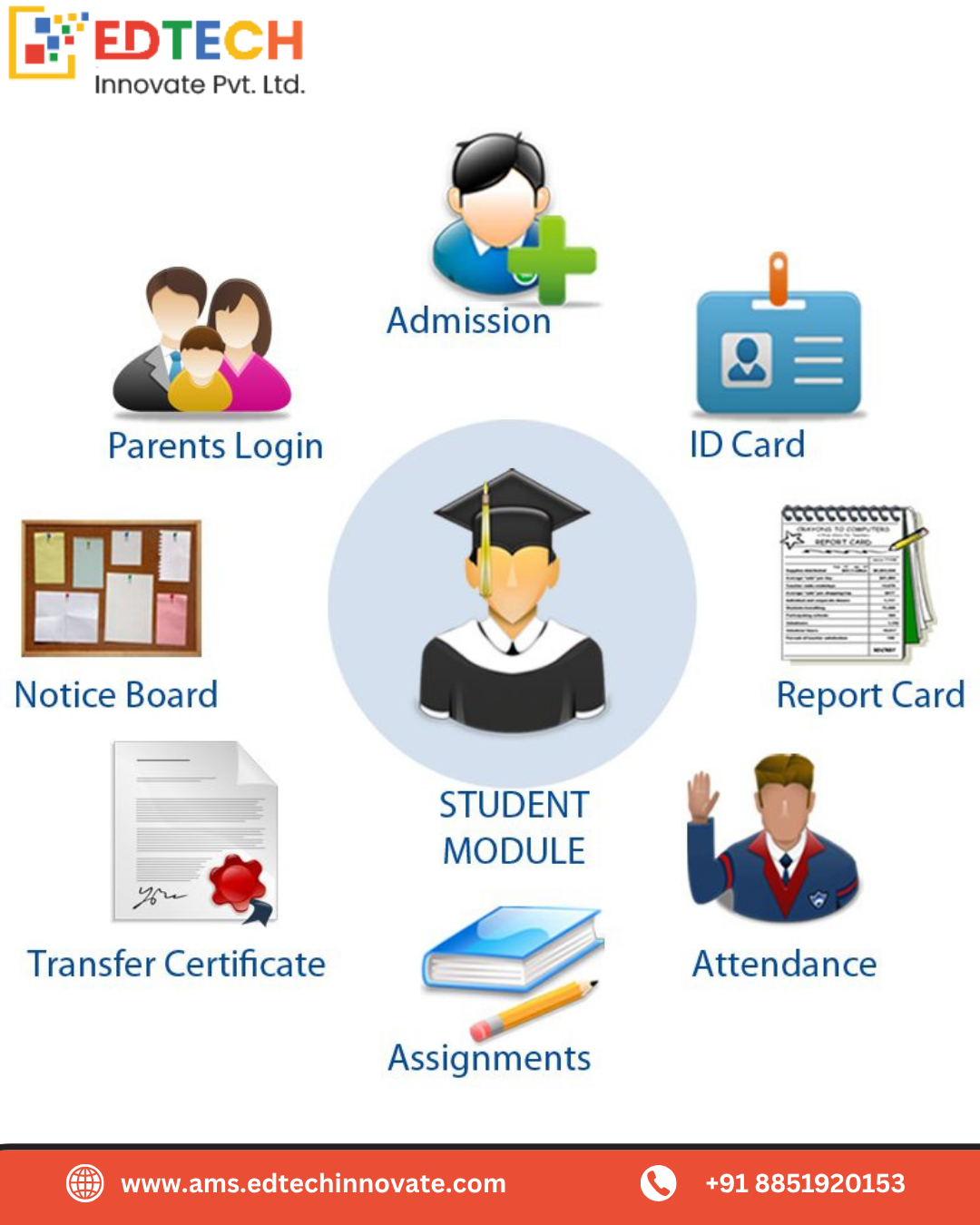
Managing admissions in schools and colleges can be a daunting task. From collecting student data to processing applications and enrolling students, the traditional paper-based system is often slow, error-prone, and time-consuming. This is where an Admission Management System (AMS) comes into play. 🚀
An Admission Management System streamlines the entire admission process, making it faster, more efficient, and completely digital. Let's explore how these systems transform admissions step by step and why they are a must-have for modern educational institutions.
What is an Admission Management System? 🖥️
An Admission Management System is a software solution designed to automate and manage all admission-related activities in schools, colleges, and universities. It eliminates manual processes and ensures that every step, from the online application to final enrollment, is smooth and transparent.
With features like online application forms, online admission portals, and enrollment tracking, these systems simplify administrative tasks and provide a seamless experience for both students and staff.
Key benefits include:
-
Reduced paperwork 📄
-
Faster processing ⏱️
-
Improved accuracy ✅
-
Real-time updates 📊
-
Enhanced communication 📧
Step 1: Online Admission Form 📝
The first step in a modern admission process is the online application form. Traditional forms required students to fill out paper applications, which were often lost or misplaced.
With an online admission portal, students can fill out forms directly on the institution's website. Important features of online forms include:
-
Easy-to-use interface 💻
-
Secure submission 🔒
-
Uploading necessary documents 📎
-
Automated data capture 🗃️
This ensures that all student information is accurately collected and ready for processing.
Step 2: Admission Management Software 💡
Once the online application forms are submitted, the admission management software takes over. This software is designed to handle the entire lifecycle of the student admission process.
Key functionalities include:
-
Application verification ✅
-
Document management 📂
-
Fee collection and payment tracking 💰
-
Automated notifications and reminders 📬
This software reduces human errors and ensures that every application is processed efficiently.
Step 3: Online Admission Portal 🌐
The online admission portal is the hub for both students and administrators. Students can track their application status, upload additional documents, and receive updates directly from the portal. Administrators can view all applications, approve or reject them, and communicate with students in real time.
Benefits of using an online admission portal:
-
Transparency in admission process 🔍
-
Real-time status updates 🕒
-
Easy communication between staff and applicants 💬
-
Centralized data management 🗄️
Step 4: Enrollment Management System 🎓
After the admission approval, the online enrollment management system comes into play. This system allows institutions to manage student enrollment efficiently. It handles:
-
Course allocation 📚
-
Class scheduling 🏫
-
Fee structures and payments 💳
-
Student ID generation 🆔
An enrollment management system ensures a smooth transition from admission to active student status without any manual intervention.
Step 5: University Admission Management System 🏛️
For colleges and universities, a university admission management system offers advanced features like:
-
Integration with learning management systems (LMS) 📘
-
Multiple program/course admissions 🎓
-
Bulk application processing 📊
-
Reporting and analytics 📈
This system provides a comprehensive solution to manage admissions for large-scale institutions, ensuring efficiency and accuracy at every step.
Read More - Benefits of Implementing an Automated Admission Management System 🎓✨
Why Choose an Admission Management Solution? 🌟
Implementing an admission management solution offers multiple advantages:
-
Time-saving: Automates repetitive tasks ⏱️
-
Accuracy: Minimizes human errors ✅
-
Convenience: Students can apply from anywhere 🌍
-
Efficiency: Centralized data management 🗄️
-
Compliance: Keeps all data secure and organized 🔒
Modern admission management systems are not just software—they are a complete solution to improve the overall admission experience for both students and administrators.
Integrating LMS with Admission Systems 📚
A Learning Management System (LMS) can be integrated with admission software to provide a seamless educational journey. Once students are admitted, they can directly access course materials, assignments, and announcements through the LMS.
Benefits include:
-
Smooth transition from admission to learning 🎓
-
Better engagement and tracking of student progress 📊
-
Centralized platform for all academic activities 🖥️
Online Admission Process: Step-by-Step Summary 🏁
-
Fill Online Application Form 📝
-
Submit Documents via Online Admission Portal 📎
-
Admin Verifies Applications ✅
-
Automated Notifications Sent to Students 📬
-
Approve Admission and Collect Fees 💳
-
Enroll Students via Enrollment Management System 🏫
-
Integrate with LMS for Academic Access 📚
This step-by-step approach ensures a hassle-free and efficient online admission process.
Conclusion 🎯
In today's digital age, using an Admission Management System is no longer optional—it's essential. From online applications to university admission management, these systems simplify administrative tasks, improve accuracy, and provide a seamless experience for students and staff.
By adopting an admission management software solution, schools and colleges can focus more on education quality and student engagement rather than paperwork and manual errors.
FAQs ❓
Q1: What is the difference between an online admission portal and an admission management system?
An online admission portal is where students apply and track their application, whereas the admission management system is the software that manages the entire admission workflow.
Q2: Can an admission management system handle both school and university admissions?
Yes! Modern systems are scalable and can manage admissions for schools, colleges, and universities efficiently.
Q3: How does integrating LMS with admission management help institutions?
Integrating LMS allows students to access courses and educational materials immediately after admission, ensuring a smooth transition from enrollment to learning.

 Arabic
 French
 Spanish
 Portuguese
 Deutsch
 Turkish
 Dutch
Dutch
 Italiano
 Russian
 Romaian
 Portuguese (Brazil)
 Tiếng Việt