


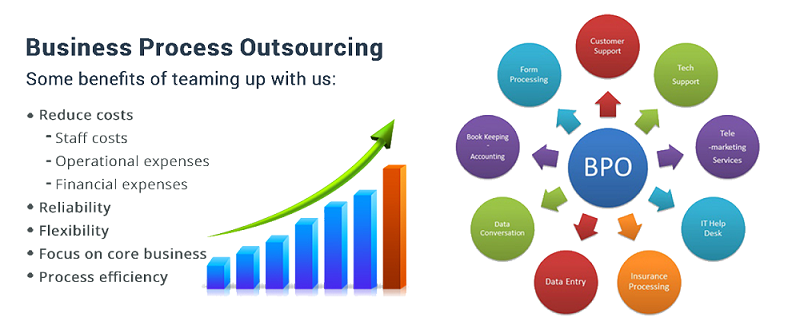
The modern Business Process Outsourcing Services industry has evolved dramatically from its early days as a simple cost-arbitrage play. Today, it stands as a mature and sophisticated sector that is integral to the functioning of the global economy, providing a wide spectrum of services that drive efficiency and innovation. The industry's journey and future potential are reflected in strong market forecasts, which estimate it will grow into a USD 603.4 billion powerhouse by 2032, maintaining a steady compound annual growth rate of 9.6% from 2024 to 2032. This evolution showcases a shift from tactical, low-cost task execution to strategic, high-value partnerships that are essential for businesses looking to thrive in a complex and fast-paced world.
The industry's history can be traced back to the outsourcing of manufacturing, which later expanded to back-office IT and data entry tasks in the 1990s, primarily driven by the promise of lower labor costs in developing countries. This first wave, BPO 1.0, was largely about labor arbitrage. The next phase, BPO 2.0, saw providers move beyond basic tasks to manage entire end-to-end processes, focusing on process improvement and efficiency gains through methodologies like Six Sigma. Now, the industry is firmly in the era of BPO 3.0, or "digital BPO," which is characterized by the integration of advanced technologies. This current phase is not just about doing the same tasks cheaper or faster, but about fundamentally reimagining and transforming business processes through automation, AI, and data analytics.
The impact of the BPO industry on global labor markets and economic development has been profound. For client countries, typically in the developed world, it has allowed businesses to become more competitive and focus resources on innovation and R&D. For provider countries, such as India, the Philippines, and Poland, the industry has been a massive engine of job creation, contributing significantly to GDP growth and the development of a skilled, modern workforce. It has spurred investment in infrastructure, education, and technology in these nations, creating a thriving middle class and fostering a culture of service excellence. The BPO industry is a prime example of globalization's power to create interdependent economic growth.
Looking ahead, the BPO industry is poised for another transformation, often termed BPO 4.0. This next wave will be defined by hyper-automation, where AI, machine learning, and RPA work in concert to create highly intelligent, self-optimizing business processes. The focus will shift even further from process execution to delivering proactive, predictive insights that drive business outcomes. Providers will act less like service vendors and more like strategic consultants and innovation partners. As the industry continues to climb the value chain, its role will become even more critical, not just for operational efficiency, but as a core driver of a client's digital transformation and long-term competitive strategy.
Explore Our Latest Trending Reports:

 English
 Arabic
 French
 Spanish
 Portuguese
 Deutsch
 Turkish
 Dutch
Dutch
 Italiano
 Romaian
 Portuguese (Brazil)
 Tiếng Việt