


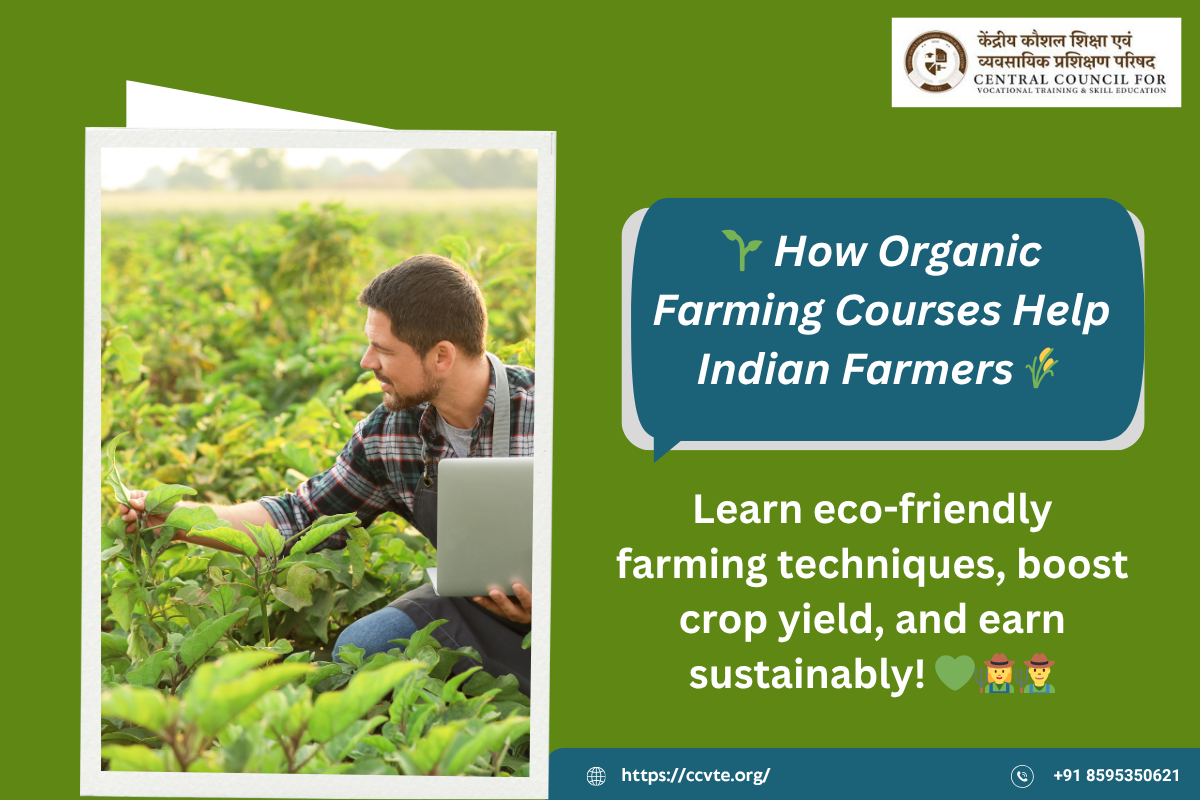
Organic farming is transforming the landscape of Indian agriculture in remarkable ways. With growing concerns about chemical fertilizers, pesticides, and environmental degradation, organic farming in India has emerged as a sustainable and eco-friendly solution for farmers, students, and entrepreneurs alike. But what exactly is organic farming, how is it reshaping agriculture, and how can one get started through courses and certifications? Let's dive deep.
What is Organic Farming? 🌾
Organic farming definition refers to an agricultural method that relies on natural processes and inputs rather than synthetic chemicals. In the context of organic farming in India , it focuses on maintaining soil fertility, enhancing biodiversity, and promoting ecological balance. This means avoiding chemical fertilizers, pesticides, and genetically modified organisms (GMOs), and instead using organic compost, bio-fertilizers, crop rotation, and natural pest control techniques.
In simple words, organic farming in India nurtures the land, protects the environment, and ensures healthier food for consumers while supporting sustainable agricultural practices. 🌱
The Rise of Organic Farming in India 🇮🇳
India has a rich history of sustainable agricultural practices, but in the last two decades, organic farming in India has witnessed a significant revival. The reasons for this growth include:
-
Rising health awareness: Consumers are increasingly choosing organic products for better nutrition and reduced chemical exposure.
-
Environmental sustainability: Farmers are moving away from chemical-intensive methods that harm soil and water resources.
-
Government support: Schemes and subsidies encourage farmers to adopt organic practices.
-
Global demand: Export opportunities for organic products have surged in international markets.
This movement is not just about farming—it's creating a shift in the way agriculture contributes to the economy, health, and ecology.
How Organic Farming is Changing Indian Agriculture 🌿
-
Improving Soil Health:
Organic methods such as composting, green manures, and crop rotation enrich soil nutrients naturally. Over time, this restores soil fertility and increases productivity. -
Promoting Biodiversity:
Organic farms maintain a variety of crops and plants, supporting local flora and fauna. This helps in controlling pests naturally and reduces reliance on harmful chemicals. -
Healthier Food Production:
By avoiding synthetic pesticides and fertilizers, organic farming ensures chemical-free production. This benefits both farmers and consumers, creating a safer food supply chain. -
Economic Benefits for Farmers:
Organic products often fetch higher market prices. With proper organic farming training and organic farming certification, farmers can access premium markets domestically and internationally. -
Sustainable Farming Practices:
Organic agriculture encourages the use of renewable resources, reduces water consumption, and prevents soil erosion, thus ensuring long-term sustainability.
Organic Farming Courses in India 🎓
For students and aspiring farmers, learning organic farming through structured courses is an excellent pathway. CCVTE offers a range of courses tailored to different needs.
Types of Organic Farming Courses:
-
Organic Farming Course (Basic Level)
-
Duration: 3 Months
-
Eligibility: High School
-
Highlights: Introduction to organic methods, soil management, composting, and pest control.
Organic Agriculture Course (Intermediate Level)
-
Duration: 6 Months
-
Eligibility: High School
-
Highlights: Crop rotation, advanced composting techniques, bio-fertilizers, farm planning, and marketing strategies.
Advanced Organic Farming Training (Professional Level)
-
Duration: 1 Year
-
Eligibility: High School
-
Highlights: Farm certification processes, organic produce marketing, export standards, and hands-on farm management.
Comprehensive Organic Farming Certification Course
-
Duration: 2 Years
-
Eligibility: High School
-
Highlights: Complete knowledge of organic farming in India, farm-to-market strategies, research projects, and business planning.
These courses are ideal for students, agricultural enthusiasts, and even working farmers who want to formalize their knowledge and gain professional organic farming certification.
Read More - What Are the Benefits of Montessori Teacher Training for Educators ?
Benefits of Organic Farming Training and Certification 📜
Enrolling in an organic agriculture course or organic farming training offers multiple advantages:
-
Practical Knowledge: Hands-on training on soil management, crop selection, and pest control.
-
Career Opportunities: Opens doors to jobs in organic farms, research institutes, or as independent agripreneurs.
-
Certification Recognition: Organic farming certification enhances credibility and access to premium markets.
-
Sustainable Skill Development: Learn eco-friendly practices that have a positive impact on the environment.
Whether you want to start your own farm or work in the organic sector, these courses are essential for gaining expertise and staying updated with modern techniques.
Government Support for Organic Farming in India 💰
What Are the Government Schemes Supporting Organic Farming in India?
The Indian government promotes organic farming in India through several initiatives:
-
Paramparagat Krishi Vikas Yojana (PKVY): Supports cluster-based organic farming, providing financial assistance to farmers.
-
National Program for Organic Production (NPOP): Focuses on certification and quality standards for organic products.
-
Mission Organic Value Chain Development for North Eastern Region (MOVCDNER): Promotes organic cultivation in northeastern states.
-
Rashtriya Krishi Vikas Yojana (RKVY): Provides funding for organic farm infrastructure.
These schemes not only encourage organic practices but also provide financial aid, training, and market linkages.
How Is the Indian Government Promoting Organic Farming?
-
Providing organic farming training and workshops.
-
Funding organic inputs like bio-fertilizers and compost units.
-
Facilitating international certification and exports.
-
Encouraging farmers to form cooperatives for better marketing.
Market Trends of Organic Farming in India 📈
What Is the Current Market Size of Organic Farming in India?
The organic food market in India is expanding rapidly. As of 2025, the market size is estimated to be around $2.5 billion, with an annual growth rate of 20-25%. Key drivers include health-conscious urban consumers, rising exports, and government incentives.
Popular organic products in demand:
-
Fruits and vegetables
-
Pulses and cereals
-
Dairy products
-
Herbal products
Organic Certification in India ✅
How Does Organic Certification Work in India?
Organic farming certification is essential for accessing premium markets. The certification process includes:
-
Application: Farmers or producers apply under recognized certification bodies.
-
Inspection: Farms are inspected for compliance with organic standards.
-
Certification: Upon approval, a certificate is issued, valid for a set period.
-
Renewal: Regular inspections ensure adherence to organic standards.
This ensures that products labeled as “organic” are genuinely free from chemicals and synthetic inputs.
Challenges Facing Organic Farming in India ⚠️
Despite its growth, organic farming in India faces several challenges:
-
High initial investment: Organic inputs and certification processes can be expensive.
-
Knowledge gap: Many farmers lack awareness and training in organic techniques.
-
Pest and disease management: Without chemicals, organic crops are vulnerable if not managed properly.
-
Market access: Small farmers often struggle to reach premium buyers.
-
Certification complexities: The process can be lengthy and bureaucratic.
Courses like organic agriculture courses and organic farming training help bridge these gaps by equipping students and farmers with practical knowledge.
Why Students Should Consider Organic Farming Courses in India 🎓🌾
Before we conclude, it’s important to highlight the importance of organic farming courses in India for students and aspiring professionals. These courses are not only about farming—they equip you with skills in sustainability, business management, research, and eco-friendly agriculture.
Enrolling in courses from reputable institutions provides:
-
Hands-on farm experience
-
Knowledge of soil and crop management
-
Understanding of certification and export procedures
-
Exposure to modern organic farming technologies
With durations ranging from 3 months to 2 years, these courses cater to different learning needs and career goals. Whether you aim to be an agripreneur, researcher, or certified organic farmer, these courses are your stepping stone to success. 🌱
Students Can Choose Other Skill Courses from CCVTE 🎓✨
CCVTE offers a wide range of skill development programs to help students gain practical knowledge, enhance employability, and explore career opportunities. Apart from organic farming, students can choose from several other skill courses based on their interests. Let’s explore them one by one:
1. CMS ED Course 🖥️
-
Duration: 3 Months – 6 Months
-
Eligibility: High School
-
Overview: This course focuses on content management systems (CMS) and electronic documentation. Students learn how to manage websites, upload content, and maintain digital platforms efficiently.
-
Benefits: Boosts digital skills, prepares students for roles in IT and digital management, and forms the foundation for a tech-driven career.
2. Documentation Executive 📑
-
Duration: 3 Months
-
Eligibility: High School
-
Overview: Students are trained to handle official documents, data entry, and filing systems. This course emphasizes accuracy, organizational skills, and office management techniques.
-
Benefits: Prepares students for administrative jobs, clerical roles, and office management positions.
3. Montessori Course Syllabus 🏫
-
Duration: 6 Months – 1 Year
-
Eligibility: High School
-
Overview: The course covers child psychology, learning methods, and Montessori teaching principles. Students learn how to design activities that enhance a child’s development.
-
Benefits: Ideal for students aspiring to become Montessori educators or work in early childhood education.
4. MLT Courses (Medical Laboratory Technician) 🧪
-
Duration: 6 Months – 1 Year
-
Eligibility: High School
-
Overview: Provides practical training in medical laboratory procedures, sample collection, and diagnostic testing. Students gain hands-on experience in laboratory operations.
-
Benefits: Opens opportunities in hospitals, diagnostic labs, and healthcare centers, making students ready for medical support roles.
5. Teacher Training Course 📚
-
Duration: 6 Months – 1 Year
-
Eligibility: High School
-
Overview: This course prepares students to become professional educators. It includes lesson planning, classroom management, and teaching strategies for different age groups.
-
Benefits: Builds a strong foundation for a teaching career in schools, coaching centers, and educational institutes.
Explore More - Unlock Career Paths Skill Based Opportunities After 12th
6. Montessori Teacher Training 🧸
-
Duration: 6 Months – 1 Year
-
Eligibility: High School
-
Overview: An advanced version of the Montessori course syllabus, focusing on teaching methodology, activity planning, and child development assessment.
-
Benefits: Equips students to manage Montessori classrooms independently and nurture young learners effectively.
7. Waste Management Courses ♻️
-
Duration: 3 Months – 6 Months
-
Eligibility: High School
-
Overview: Students learn eco-friendly waste disposal, recycling methods, and sustainable practices. The course focuses on environmental protection and sanitation management.
-
Benefits: Prepares students for careers in environmental agencies, waste management companies, and sustainability projects.
8. Computer Teacher Training Course 💻
-
Duration: 3 Months – 6 Months
-
Eligibility: High School
-
Overview: Students gain knowledge about computer basics, software, programming, and teaching methods. The focus is on training students to become computer educators.
-
Benefits: Opens career opportunities as computer instructors in schools, colleges, and training institutes.
9. Sewing Machine Operator 👗
-
Duration: 3 Months – 6 Months
-
Eligibility: High School
-
Overview: Practical training on operating sewing machines, stitching techniques, and garment production. Students develop hands-on skills required in the textile industry.
-
Benefits: Enables students to work in tailoring units, fashion design studios, or start their own small-scale garment business.
10. Patient Care Management Course 🏥
-
Duration: 6 Months
-
Eligibility: High School
-
Overview: Focuses on patient handling, hospital protocols, basic first aid, and caregiving techniques. Students are trained to assist medical staff and provide quality patient care.
-
Benefits: Prepares students for careers in hospitals, nursing homes, and home healthcare services.
Why Choose CCVTE Skill Development Programs? 🌟
CCVTE’s courses are designed with students’ career growth in mind:
-
Practical Training: Hands-on sessions ensure students gain real-world skills.
-
Flexible Duration: Courses ranging from 3 months to 2 years cater to all learning needs.
-
Career-Oriented: Focused on employability and skill enhancement.
-
Certification: Students receive recognized certifications upon completion, enhancing job prospects.
-
Diverse Options: From agriculture and healthcare to IT, education, and environment, students have a wide range of courses to choose from.
Whether a student wants to become an educator, environmental professional, healthcare assistant, or skilled technician, CCVTE's skill development programs provide the foundation for a successful career. 🌱
Conclusion 🌟
How Is Organic Farming Changing Indian Agriculture? The answer lies in its multi-dimensional impact: improving soil health, promoting biodiversity, producing healthier food, creating economic opportunities for farmers, and supporting sustainable practices.
With structured organic farming courses, organic farming training, and recognized organic farming certification, India is not only cultivating healthier food systems but also creating a generation of skilled professionals in the organic sector.
As awareness grows and government support strengthens, organic farming in India is poised to transform agriculture into a more sustainable, profitable, and eco-friendly sector.
For students and farmers, embracing organic farming courses in India is not just an educational choice—it's a commitment to a healthier planet and a sustainable future. 🌱
FAQs on Organic Farming in India
Q1. What Are the Government Schemes Supporting Organic Farming in India?
Schemes like PKVY, NPOP, MOVCDNER, and RKVY provide financial assistance, training, and market support to promote organic farming.
Q2. How Is the Indian Government Promoting Organic Farming?
Through training programs, financial incentives, certification support, and market development for organic produce.
Q3. What Is the Current Market Size of Organic Farming in India?
The organic food market in India is around $2.5 billion and growing at 20-25% annually, driven by urban demand and exports.
Q4. How Does Organic Certification Work in India?
Farms undergo inspection by certification bodies, ensuring compliance with organic standards before certification is issued and periodically renewed.
Q5. What Are the Challenges Facing Organic Farming in India?
Challenges include high initial investment, knowledge gaps, pest management, market access, and complex certification processes.

 Arabic
 French
 Spanish
 Portuguese
 Deutsch
 Turkish
 Dutch
Dutch
 Italiano
 Russian
 Romaian
 Portuguese (Brazil)
 Tiếng Việt