


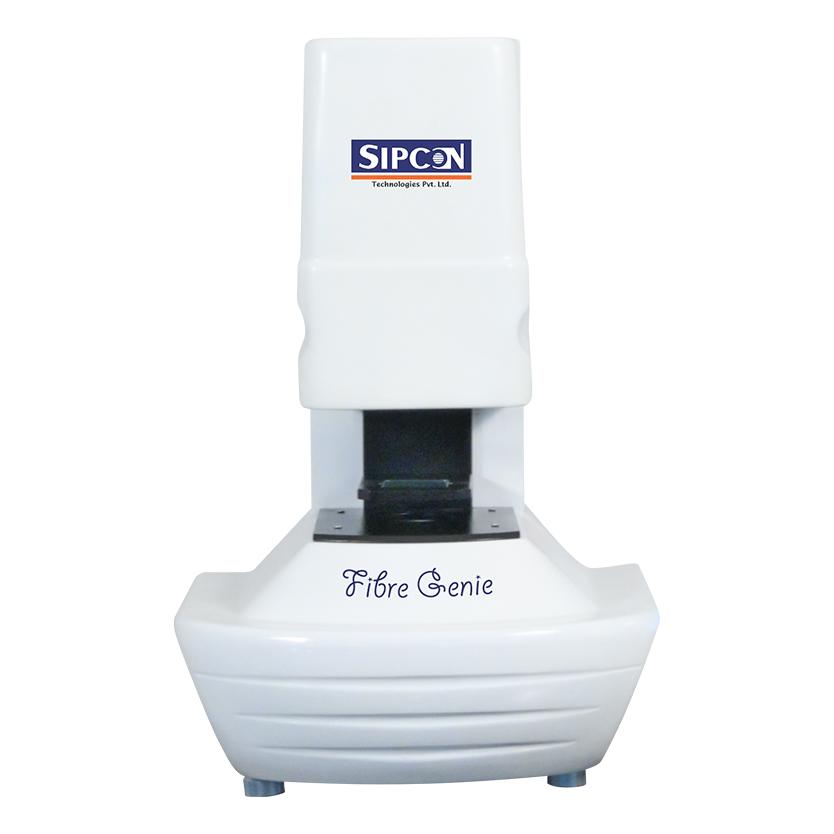
Precise and uniform properties of insulation and sheath materials are key factors in establishing the quality and reliability of cables within the electrical and manufacturing industry today. Every wire that supplies electrical current to some machine, connects a circuit, or carries some electrical signal, is dependent on its insulation and sheath for protection, performance, and safety.
As a result, cable testing and cable measuring can be some of the most vital areas of production and quality control of cables. Today, one of the most sophisticated tools in the process of measuring and testing cables is the Cable Insulation Sheath Specimen Slicing Machine which is specifically designed to slice cables and prepare samples for accurate testing while ensuring every cable is compliant with industry standards.
Importance of Precision in Cable Manufacturing
Cables are the backbone of industrial, commercial, and domestic electrical systems. They must perform efficiently under varying conditions—be it heat, pressure, or electrical load. The insulation and outer sheath play a vital role in ensuring this performance by protecting the conductive core from external damage, moisture, and environmental stress.
However, the quality of this insulation depends heavily on its thickness, uniformity, and adherence to regulatory standards. Even a slight deviation can lead to serious consequences such as short circuits, electrical leakage, or mechanical failure. Therefore, manufacturers prioritize precise wire insulation thickness measurement as a crucial quality control step in production.
Challenges in Measuring Cable Insulation
Despite advancements in testing technology, measuring insulation thickness accurately can be challenging. Traditional methods often rely on manual cutting or optical measurement techniques that may produce inconsistent or inaccurate results. These challenges arise due to factors like uneven specimen surfaces, improper sample slicing, or human errors during preparation.
Since insulation materials can vary from soft polymers to hard thermoplastics, achieving a clean, even cut without deforming the sample is essential. This is where a specialized slicing machine comes into play—offering precision, repeatability, and efficiency in specimen preparation.
Introducing the Cable Insulation Sheath Specimen Slicing Machine
The Cable Insulation Sheath Specimen Slicing Machine has transformed how laboratories and manufacturers prepare cable samples for testing. Designed with high precision and advanced engineering, this machine allows users to slice thin, uniform specimens from the insulation or sheath of a cable without changing the material's physical properties.
By using fine-tuned mechanical controls, the slicing machine ensures that each sample maintains its original characteristics, which is crucial for accurate testing and reliable data. Whether for mechanical testing, microscopic analysis, or thermal evaluation, the machine ensures every specimen meets the standards required for further inspection.
How the Specimen Slicing Machine Works
The working mechanism of this slicing machine is based on precision-controlled cutting technology. The operator mounts the cable securely onto the holding fixture, ensuring there is no movement during operation. The machine is then set to the required thickness level, and the blade, often made from high-quality alloy or diamond material, gently slices through the insulation or sheath layer.
Unlike manual cutting, which may distort or compress the material, the machine maintains consistent pressure and speed, resulting in a smooth and uniform sample. The precision alignment system guarantees that every slice corresponds exactly to the set thickness, providing samples suitable for microscopic or physical inspection.
Key Features and Advantages
-
High Accuracy and Consistency:
The primary advantage of the slicing machine lies in its unmatched precision. It produces consistent samples, eliminating variations that could affect test results. -
User-Friendly Operation:
Equipped with easy-to-use controls, the machine allows technicians to set parameters quickly and perform slicing with minimal training. -
Time Efficiency:
Automated slicing reduces preparation time significantly compared to manual cutting. It helps laboratories process multiple samples faster while maintaining uniformity. -
Material Versatility:
The machine can handle a wide range of cable types and insulation materials, including PVC, XLPE, rubber, and polyethylene. -
Enhanced Safety:
Safety guards, secure clamping systems, and enclosed cutting zones minimize risks to operators, making it ideal for high-volume testing environments. -
Precision Adjustments:
Fine-tuning knobs and digital displays allow for micro-level adjustments, ensuring the specimen’s exact thickness and surface quality.
Applications Across Industries
The Cable Insulation Sheath Specimen Slicing Machine is widely used in industries where cables and wires form the foundation of production and performance.
-
Electrical and Electronics Manufacturing: For ensuring that cables used in devices and power systems meet safety standards.
-
Automotive Industry: To evaluate insulation properties in vehicle wiring harnesses.
-
Telecommunication Sector: For testing cables used in data transmission and fiber optic systems.
-
Aerospace and Defense: To maintain high reliability in mission-critical electrical connections.
-
Testing Laboratories: To support R&D and quality inspection processes with accurate sample preparation.
Role in Quality Control and Compliance
For manufacturers, maintaining compliance with international standards such as IEC, ASTM, or ISO is essential. Testing procedures for insulation thickness, tensile strength, and elongation require specimens prepared under controlled conditions. The slicing machine ensures that every sample meets these conditions, minimizing discrepancies and ensuring reliable results.
It also supports automated testing systems where consistency of sample thickness directly influences the accuracy of measurement outcomes. As global industries shift toward precision-driven manufacturing, this equipment has become a cornerstone of modern cable testing labs.
Enhancing Efficiency and Reducing Waste
One often overlooked advantage of using a dedicated specimen slicing machine is material optimization. Unlike manual methods that may waste portions of the cable or produce unusable samples, automated slicing minimizes material loss. This not only saves costs but also contributes to sustainable manufacturing practices.
Moreover, its robust design ensures long-term durability, reducing maintenance downtime and supporting continuous production.
The Future of Cable Testing
As technology evolves, testing equipment continues to advance toward greater automation, digital integration, and data accuracy. Specimen slicing machines are now being developed with digital controls, programmable settings, and connectivity features that allow for integration with laboratory management systems.
Such advancements enable more precise control, faster sample preparation, and seamless documentation—paving the way for fully automated cable testing workflows.
Conclusion
In today's precision-driven manufacturing world, tools like the Cable Insulation Sheath Specimen Slicing Machine play a vital role in ensuring that every cable produced meets the highest standards of safety and performance. With its unmatched accuracy, efficiency, and versatility, it supports industries in maintaining consistent quality and reliability across production batches.
Accurate testing begins with accurate specimen preparation—and this machine from cable measurement ensures just that, empowering manufacturers to achieve excellence in every step of the process.

 Arabic
 French
 Spanish
 Portuguese
 Deutsch
 Turkish
 Dutch
Dutch
 Italiano
 Russian
 Romaian
 Portuguese (Brazil)
 Tiếng Việt