


In our modern technology-driven world, home appliances are at the center of our daily lives, whether it is refrigerators, washing machines, air conditioners or electric irons. As the number of electrical appliances increases, there are also increasing impacts on quality, durability and safety. Periodic testing of home appliances is an indispensable tool to ensure safety and performance. Proper testing signals compliance with the country's international safety standards (i.e., IS 302), and evaluation criteria establishes if it meets satisfactory levels of safety, performance and efficiency for consumer use.
Understanding the Importance of Appliance Testing
Home appliance testing ensures that products are safe for domestic use and perform as expected under various operating conditions. Electrical faults, overheating, short circuits, or poor insulation can lead to fire hazards or electric shocks. Rigorous testing helps detect such issues early in the manufacturing process. Additionally, it safeguards manufacturers from product recalls, legal issues, and reputational damage, while building consumer trust.
Testing is not limited to verifying safety; it also evaluates energy efficiency, functional performance, and reliability. This process ensures that appliances conform to energy labels, quality standards, and durability expectations that consumers rely on.
Overview of IS 302 Standards
The home appliance testing IS 302 standard, formulated by the Bureau of Indian Standards (BIS), outlines specific safety requirements for electrical appliances. It aligns closely with international benchmarks such as IEC 60335, ensuring Indian products are globally competitive. IS 302 covers various household appliances, including cooking devices, washing machines, electric fans, irons, and other similar items.
The standard specifies requirements for design, insulation resistance, moisture resistance, mechanical stability, temperature rise, and protection against electric shock. It also includes performance testing to ensure appliances operate safely within the rated voltage and environmental conditions. Manufacturers must adhere to IS 302 before affixing the BIS certification mark, which serves as an assurance of product safety and quality.
Key Types of Home Appliance Testing Equipment
To comply with IS 302 and other global standards, manufacturers rely on specialized testing instruments. Some of the commonly used equipment includes:
-
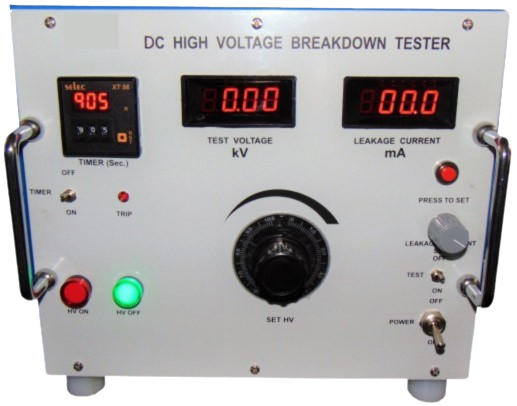
Hi-Pot Testers: Used to measure insulation resistance and detect potential leakage currents between live parts and the appliance body.
-
Earth Bond Testers: Evaluate the strength of the earth connection to ensure safety against electric shock.
-
Temperature Rise Test Equipment: Monitors temperature increases in critical components during prolonged use.
-
Leakage Current Testers: Measure current leakage to ensure it remains within safe limits.
-
Endurance Test Systems: Assess long-term performance and durability by simulating continuous usage conditions.
-
Glow Wire Test Apparatus: Tests the fire resistance of plastic materials used in appliance housings and internal parts.
-
Load and Performance Test Benches: Verify whether appliances deliver their rated output efficiently without overheating or malfunctioning.
Each of these tools helps verify a specific safety or performance parameter as defined in IS 302, ensuring comprehensive quality assurance across the product lifecycle.
Steps Involved in the Testing Process
The process of appliance testing generally involves multiple stages:
-
Pre-Inspection and Sample Preparation: Engineers check the physical condition of the appliance and prepare it for testing.
-
Electrical Safety Testing: Conducted using Hi-Pot and earth bond testers to ensure electrical insulation and grounding.
-
Functional Testing: Ensures the appliance operates correctly under different load and temperature conditions.
-
Thermal and Mechanical Testing: Monitors heat generation, component stability, and protection against mechanical stress.
-
Endurance Testing: Simulates long-term use to detect premature wear or potential points of failure.
-
Reporting and Certification: Results are compiled and analyzed. Products meeting all parameters can be certified as IS 302 compliant.
Each stage must be meticulously documented, as these reports serve as proof of compliance during BIS audits or export certifications.
Role of Accredited Testing Laboratories
While many large manufacturers maintain in-house testing facilities, smaller companies often rely on NABL-accredited laboratories. These labs are equipped with advanced instruments and are authorized to perform tests according to IS 302 and IEC 60335 standards. Partnering with accredited labs ensures unbiased testing, faster certification, and credibility in domestic and international markets.
Such facilities also provide consultancy services to help manufacturers interpret IS 302 requirements and improve product design to meet compliance standards efficiently.
Benefits of Using Advanced Testing Equipment
Investing in modern testing systems brings several advantages to manufacturers:
-
Improved Safety Compliance: Accurate data ensures adherence to safety norms.
-
Faster Product Certification: Automated testing reduces manual errors and accelerates approval timelines.
-
Enhanced Quality Control: Continuous monitoring helps identify and correct faults before mass production.
-
Increased Consumer Confidence: Certified appliances strengthen brand reputation and customer satisfaction.
-
Export Readiness: IS 302 alignment with IEC standards facilitates international market access.
Emerging Trends in Appliance Testing
As home appliances become smarter and more connected, testing requirements are evolving too. The rise of IoT-enabled appliances demands new test parameters such as cybersecurity, network stability, and software reliability. Additionally, sustainability and energy efficiency are becoming core testing areas. Advanced laboratories are integrating AI-based data analytics, automated robotic arms, and digital twins to enhance precision and consistency in results.
Conclusion
The significance of appliance testing cannot be overstated. It serves as the foundation for ensuring that every electrical product entering a household is safe, reliable, and efficient. By adhering to IS 302 and utilizing advanced home appliance testing equipment, manufacturers not only ensure regulatory compliance but also contribute to consumer safety and industry credibility.

 English
 Arabic
 French
 Spanish
 Portuguese
 Deutsch
 Dutch
Dutch
 Italiano
 Russian
 Romaian
 Portuguese (Brazil)
 Tiếng Việt