


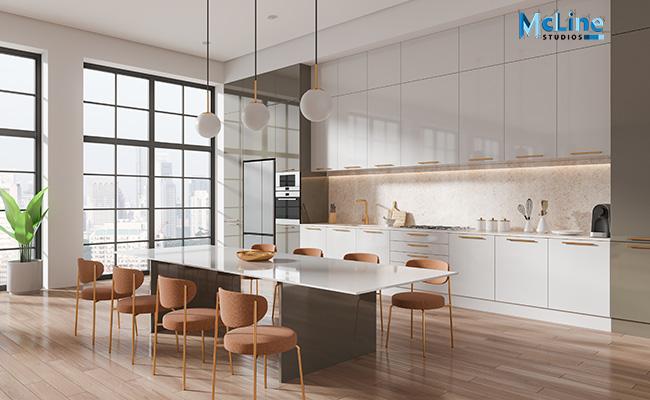
In residential construction, turning an idea into a tangible home is often a complex and costly journey. Traditional blueprints and sketches, while essential, can sometimes fall short in conveying the full vision of a space to clients, contractors, or stakeholders.
This is where 3D rendering comes into play—a powerful tool that transforms abstract plans into vivid, realistic visualizations. By allowing homeowners and designers to see every detail before the first brick is laid, 3D rendering not only enhances communication but also reduces costly errors, speeds up decision-making, and brings creative ideas to life in ways that 2D drawings simply cannot.
Whether it’s visualizing lighting, textures, or layouts, 3D renderings provide a clear roadmap, ensuring that the dream home envisioned on paper becomes the home realized in reality.
What is 3D Rendering in Residential Design?
3D rendering is the process of creating realistic, three-dimensional images of a building or home before it is actually built. In residential design, it allows homeowners, architects, and builders to see how a house will look in real life, including the layout, colors, materials, and lighting. Unlike traditional 2D drawings or blueprints, which show only flat views, 3D rendering brings the design to life, making it easier to understand and visualize.
With 3D rendering, designers can create detailed models of both the inside and outside of a home. Interiors can be shown with furniture, fixtures, flooring, and even lighting effects, helping homeowners imagine how each room will feel. Exteriors can include landscaping, driveways, and the surrounding environment, giving a complete picture of the property.
One of the biggest advantages of 3D rendering is that it helps prevent mistakes. Before construction begins, designers and clients can spot problems in the layout, design choices, or materials. Changes can be made quickly in the digital model, saving time and money. It also helps builders and contractors understand exactly what needs to be done, reducing confusion during construction.
3D rendering is a powerful communication tool. It helps homeowners clearly express their ideas to architects and contractors, ensuring everyone is on the same page. Overall, 3D rendering in residential design turns abstract plans into realistic, easy-to-understand visuals, making the entire building process smoother and more efficient while helping create homes that match the vision perfectly.
Visualizing Your Dream Home
Building a home is one of the most exciting and important experiences in life. However, it can also be challenging because it is hard to imagine how the final house will look just from drawings or plans. This is where visualizing your dream home becomes important. With modern tools like 3D rendering, you can see a realistic picture of your home before construction begins.
Visualizing your home helps you make better decisions. You can see how each room will look, how furniture will fit, and how different colors and materials will appear together. You can also check how natural light will enter rooms at different times of the day. This makes it easier to plan every detail according to your taste and lifestyle.
It is not only useful for interiors but also for exteriors. You can see your garden, driveway, walls, and even the surrounding environment. This helps you understand the overall look and feel of your home.
Another advantage is that it reduces mistakes. If something does not look right, you can change it in the design stage instead of during construction. This saves time, money, and stress.
Most importantly, visualizing your dream home creates confidence. You can be sure that what you imagine on paper will become a reality. It turns ideas into clear visuals, helping you design a home that truly reflects your style, needs, and dreams.
Detecting Design Flaws Early
One of the biggest challenges in building a home is finding problems in the design before construction starts. Small mistakes in the layout, measurements, or materials can lead to big issues later, costing time and money. This is why detecting design flaws early is very important.
With tools like 3D rendering, homeowners and designers can see every detail of a house before it is built. This allows them to identify mistakes in the design early on. For example, a room may feel too small, furniture might not fit properly, or windows may not let in enough natural light. These problems can be fixed easily in the digital model rather than during construction.
Early detection also helps avoid structural problems. Designers can check if walls, doors, and staircases are placed correctly and if the overall flow of the house makes sense. They can also ensure that plumbing, electrical, and other systems are planned accurately.
Detecting design flaws early saves money, as changes during construction are often expensive. It also saves time, preventing delays caused by rework. Most importantly, it gives homeowners confidence that the final home will match their expectations.
Enhancing Communication Between Stakeholders
Building a home or residential project involves many people, including homeowners, architects, designers, contractors, and builders. One of the biggest challenges in such projects is ensuring clear communication between everyone involved. Misunderstandings can lead to mistakes, delays, and extra costs. Enhancing communication between stakeholders is essential for a smooth and successful construction process.
3D rendering is a powerful tool that improves communication. Instead of relying only on technical drawings or verbal explanations, stakeholders can see a realistic visual of the project. Homeowners can understand the design easily, while architects and contractors can explain details clearly. Everyone can see the layout, materials, colors, and even furniture placement, making it easier to discuss ideas and changes.
Improved communication also helps in making faster decisions. If homeowners want to make a change, it can be shown immediately in the 3D model. Contractors can understand the requirements accurately, reducing mistakes during construction. It also ensures that everyone shares the same vision of the project, minimizing confusion and misunderstandings.
Better communication not only saves time and money but also builds trust between stakeholders. When everyone sees the same clear picture, collaboration becomes smoother, and the project moves forward more efficiently. Ultimately, using visual tools like 3D rendering enhances communication and ensures that the dream home is built exactly as planned.
Marketing and Selling Homes
Selling a home is not just about putting it on the market—it is about showing potential buyers exactly what they can expect. One of the most effective ways to do this today is through 3D rendering and visualization. By creating realistic images or virtual tours of a home before it is built or staged, sellers can attract more interest and help buyers make decisions faster.
3D rendering allows buyers to see every detail of a property, including room layouts, furniture placement, colors, lighting, and even outdoor spaces like gardens or patios. This makes it easier for them to imagine living in the home, which is often difficult with traditional floor plans or photographs alone. Virtual tours and realistic images give buyers confidence, as they can explore the home from the comfort of their own space.
For real estate agents and developers, 3D visuals are powerful marketing tools. They can be used on websites, social media, and promotional materials to showcase properties in an attractive and professional way. This helps generate more leads and increases the chances of selling homes faster.
Additionally, 3D rendering helps reduce misunderstandings or disappointments. Buyers know exactly what to expect, which can lead to smoother transactions and higher satisfaction. Overall, using 3D visualization in marketing and selling homes improves communication, attracts more buyers, and makes the selling process more efficient and successful.
The End Note
3D rendering has transformed the way residential projects are designed, built, and marketed. By turning abstract plans into realistic, detailed visuals, it allows homeowners, architects, and builders to see the full picture before construction begins. This technology helps visualize dream homes, detect design flaws early, and improve communication between all stakeholders, reducing costly mistakes and delays. Beyond construction, 3D renderings are also powerful tools for marketing and selling homes, helping buyers understand and connect with properties even before they are built.
Ultimately, 3D rendering bridges the gap between imagination and reality. It ensures that every detail—from layouts and materials to lighting and landscaping—is thoughtfully planned and accurately executed. By embracing this technology, homeowners can confidently make design choices, builders can streamline construction, and real estate professionals can attract and satisfy buyers more effectively. In a world where precision, clarity, and efficiency are crucial, 3D rendering is no longer just an option—it is an essential part of creating homes that truly reflect vision, style, and dreams.

 English
 Arabic
 French
 Spanish
 Portuguese
 Deutsch
 Dutch
Dutch
 Italiano
 Russian
 Romaian
 Portuguese (Brazil)
 Tiếng Việt