


Introduction
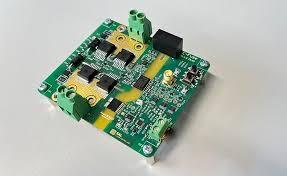
The automotive eFuse market is growing rapidly due to the increasing complexity of vehicle electrical systems and the rise of electric and hybrid vehicles. An electronic fuse (eFuse) is a solid-state protection device that safeguards circuits from overcurrent, short circuits, and electrical faults. Unlike traditional mechanical fuses, eFuses offer faster response times, precise current limiting, and integration with vehicle electronics for real-time monitoring. As modern vehicles incorporate more advanced features such as infotainment systems, driver assistance systems, and high-voltage batteries, eFuses have become essential for ensuring safety, reliability, and performance.
Market Drivers
One of the key drivers of the automotive eFuse market is the growing adoption of electric vehicles (EVs) and hybrid electric vehicles (HEVs). These vehicles operate at higher voltages and require advanced protection solutions to prevent damage to critical battery and powertrain components. Increasing consumer demand for safety, reliability, and smart diagnostics in vehicles is also fueling the market. Furthermore, stringent automotive safety regulations and standards across Europe, North America, and Asia-Pacific are encouraging manufacturers to integrate advanced eFuse solutions in both traditional and electric vehicles. The trend toward connected and autonomous vehicles further boosts demand, as electronic protection devices are essential for complex sensor and control systems.
Market Challenges
Despite strong growth potential, the automotive eFuse market faces several challenges. High cost compared to conventional fuses can limit adoption in cost-sensitive segments. Compatibility and integration with diverse automotive electronic architectures require careful design and testing. Thermal management is a critical consideration, as eFuses must operate reliably in high-temperature environments. Additionally, rapid advancements in EV technology mean that eFuse manufacturers must continually innovate to meet evolving voltage and current requirements. Supply chain constraints, including semiconductor shortages, can also impact production and availability.
Market Segmentation
The automotive eFuse market can be segmented by type, voltage rating, and vehicle type.
- By Type: High-side eFuses, low-side eFuses, and bidirectional eFuses. High-side eFuses are commonly used in battery protection and power distribution, while low-side eFuses are utilized for load and circuit protection.
- By Voltage Rating: Low voltage (12V/24V), medium voltage (48V), and high voltage (above 60V). High-voltage eFuses are essential for electric vehicles and hybrid systems.
- By Vehicle Type: Passenger cars, commercial vehicles, electric vehicles, and hybrid vehicles. EVs and HEVs dominate the demand due to their complex high-voltage electrical systems.
Regional Insights
The automotive eFuse market has strong regional dynamics. Europe leads the market due to stringent safety regulations, high EV adoption, and advanced automotive technology. North America also shows strong growth, driven by the rise of EVs, hybrid vehicles, and smart car technologies. Asia-Pacific, led by China, Japan, and South Korea, is witnessing rapid expansion due to increasing EV production, urbanization, and automotive manufacturing growth. Latin America and the Middle East & Africa are emerging markets, with growing demand for passenger vehicles and safety-compliant components.
Key Market Trends
Several trends are shaping the automotive eFuse market. Integration with battery management systems (BMS) is becoming standard in electric vehicles to enhance safety and performance. The rise of solid-state fuses offers faster response, precise control, and durability compared to traditional fuses. Automotive manufacturers are increasingly using digital monitoring and connectivity features, enabling real-time fault detection and predictive maintenance. The growing emphasis on vehicle electrification, lightweight components, and energy efficiency is also encouraging adoption. Collaborations between eFuse manufacturers, EV OEMs, and technology providers are accelerating innovation and market expansion.
Future Outlook
The automotive eFuse market is expected to witness robust growth over the next decade. The global shift toward electric and hybrid vehicles, combined with advancements in vehicle electronics, will continue to drive demand for sophisticated protection solutions. Future innovations may include fully integrated smart eFuse systems with IoT connectivity and predictive diagnostics. Cost reductions through mass production and advancements in semiconductor technologies will make eFuses more accessible across vehicle segments. With increasing adoption of autonomous, connected, and electric vehicles, the automotive eFuse market is poised to become a critical component of the future automotive ecosystem.
Conclusion
The automotive eFuse market is expanding rapidly, fueled by vehicle electrification, advanced electronic systems, and safety regulations. While challenges such as cost, integration, and thermal management exist, innovations in solid-state technology and digital monitoring are driving adoption. eFuses are essential for ensuring the safety, efficiency, and reliability of modern vehicles, particularly electric and hybrid models. The market is expected to grow steadily, becoming a cornerstone of future automotive technology.

 English
 Arabic
 French
 Spanish
 Portuguese
 Deutsch
 Turkish
 Italiano
 Russian
 Romaian
 Portuguese (Brazil)
 Tiếng Việt