


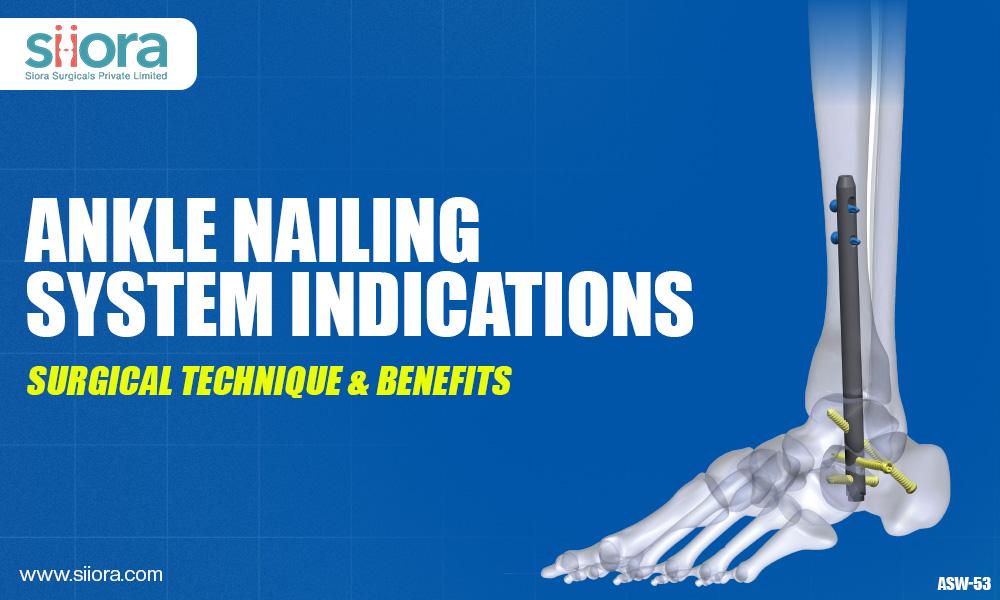
Having problems with your ankle or hindfoot that just won’t get better? Sometimes, when joints are badly damaged by arthritis, injury, or deformity, doctors turn to a procedure called ankle nailing. This surgery with the ankle nailing system essentially joins three important bones—the shin (tibia), ankle (talus), and heel (calcaneus)—into one solid bone to stop the pain and provide stability.
When Do Doctors Consider Ankle Nailing?
Ankle nailing isn’t usually the first choice. It’s reserved for tough cases, like when other treatments have failed or aren’t suitable. Think of situations like:
-
A loss of blood flow to the talus bone, causing it to weaken or collapse
-
Previous ankle replacements that stopped working properly
-
Complex ankle fractures that healed badly, leading to pain or instability
-
Severe deformities from nerve problems, such as after a stroke or paralysis
-
Arthritis that’s eaten away the joint cartilage, making movement painful and difficult
-
Failed surgeries aimed at fusing the ankle in the past
-
Charcot foot—this can cause major foot instability and deformity
Basically, if your ankle problems are severe and other fixes aren’t cutting it, ankle nailing might be the answer.
What Happens During the Surgery?
This surgery is a bit different from traditional open operations. Instead of a big cut, the surgeon makes a small incision on the bottom of the heel. Here’s a quick overview:
-
The patient lies down so the surgeon can easily reach the ankle and heel with help from X-ray imaging.
-
A tiny cut is made on the heel’s underside to carefully enter the bones.
-
A guidewire is threaded through the heel bone, ankle bone, and up the shin bone to align things perfectly.
-
Then, the bone canal is gently widened to fit a metal rod or nail.
-
This nail is slid in carefully, locking the three bones together.
-
Screws are placed to secure everything tightly.
-
Some nails have a feature that gently squeezes the bones together to help them fuse smoothly.
Because the surgery is done through a small cut, it usually means less pain afterward and quicker healing compared to traditional methods.
Why Is Ankle Nailing a Good Option?
Here’s why so many surgeons—and patients—choose this procedure:
-
It provides strong, stable support to the ankle and foot, helping bones fuse properly.
-
It can reduce or completely remove the pain caused by damaged joints.
-
Many patients regain a surprising amount of mobility and confidence after recovery.
-
The smaller incisions mean there’s usually less chance of infection and faster healing times.
-
It works well even for complicated cases where other surgeries or treatments have failed.
-
The metal used is strong and durable, designed to last a long time inside the body.
-
Surgeons can customize the placement of orthopaedic implant screws and use compression tools to fit the patient’s unique anatomy.
In simple terms, if your ankle has been giving you trouble for a long time and other treatments didn’t help, this surgery might offer real relief and a chance to walk again without pain.

 English
 Arabic
 French
 Portuguese
 Deutsch
 Turkish
 Dutch
Dutch
 Italiano
 Russian
 Romaian
 Portuguese (Brazil)
 Tiếng Việt