


Why this guide?
If you’re planning Umrah, you don’t just want a ticket and a hotel—you want clarity. Below, you’ll discover where Umrah comes from, why it matters, and exactly what to expect from modern Umrah packages so you can book confidently and focus on worship.
A brief history of Umrah
Umrah—often called the “lesser pilgrimage”—is a devotional journey to Makkah that can be performed any time of the year. Its roots trace back to Prophet Ibrahim (Abraham) عليه السلام and his family, whose sacrifices shaped many of our rites. In the time of the Prophet Muhammad ﷺ, Umrah was reaffirmed as a Sunnah act, distinct from Hajj in timing, obligations, and scale.
Key historical moments:
- Pre-Islamic pilgrimage customs existed in Makkah, many of which were purified and restored to monotheistic worship by the Prophet ﷺ.
- Hudaybiyyah and the “Umrah of Qada”: Early Muslims faced restrictions but eventually performed Umrah peacefully, underscoring the pilgrimage’s enduring significance.
- Continuous tradition: For over 14 centuries, Umrah has remained a living act of devotion that unites Muslims from every culture and language.
Spiritual significance | more than a trip
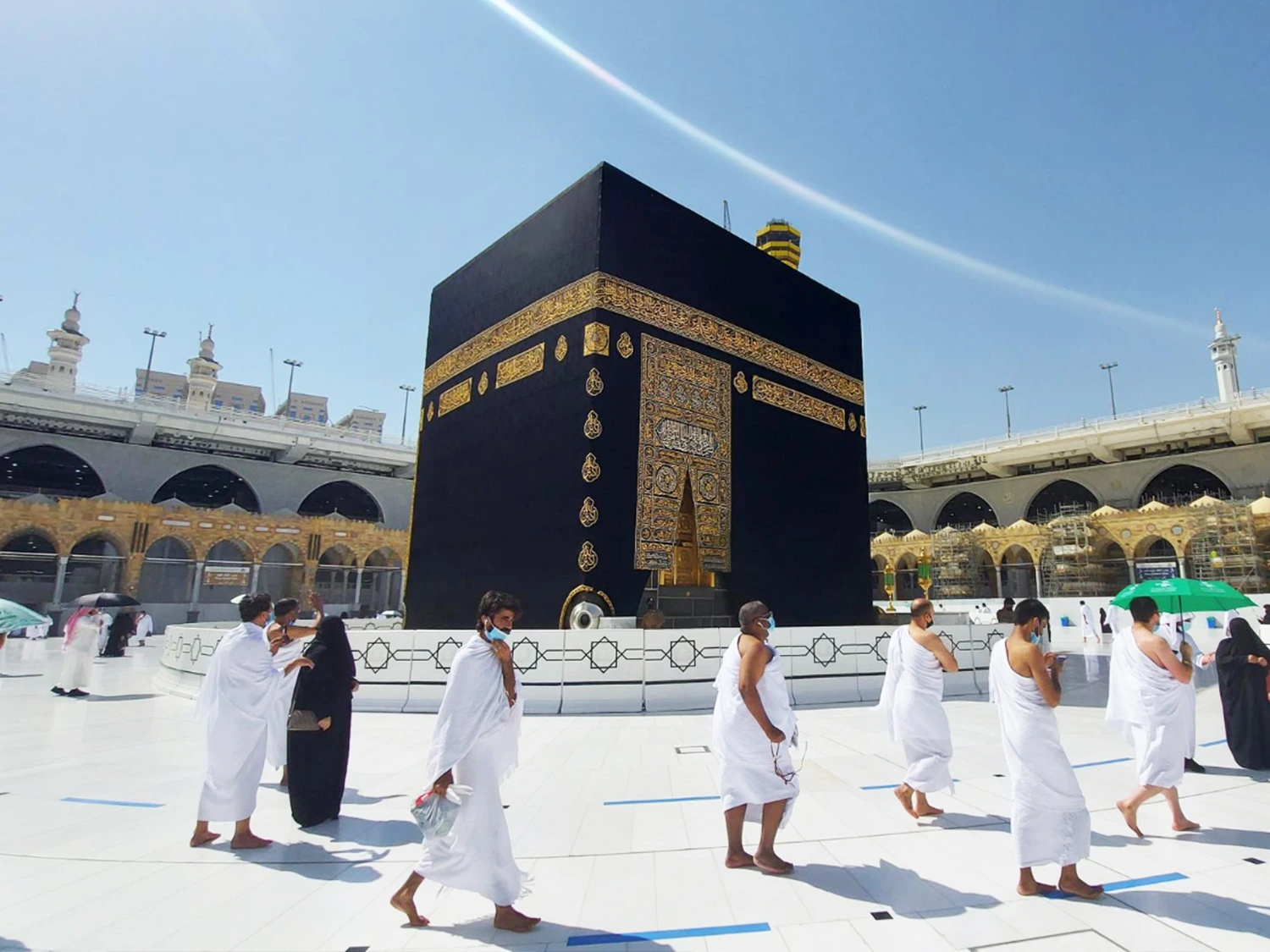
Umrah is a concentrated experience of humility, remembrance, and renewal. Pilgrims enter ihram, symbolizing equality and detachment from worldly status. Tawaf around the Ka‘bah re-centers the heart around the worship of Allah alone. Sa‘i between Safa and Marwah commemorates Hajar’s steadfast trust, reminding us that sincere effort invites divine relief. Concluding with halq/taqsir (shaving or trimming), pilgrims mark a fresh chapter.
Umrah vs. Hajj: quick contrast
- Timing: Hajj occurs in Dhul-Hijjah on fixed dates; Umrah is year-round.
- Obligation: Hajj is obligatory once in a lifetime if able; Umrah is a highly emphasized Sunnah (with scholarly differences).
- Duration/Complexity: Hajj is multi-day with specific rites; Umrah can be completed in hours, depending on crowd levels.
The essential rites of Umrah (overview)
- Ihram: Make intention and enter the state of ihram from the miqat (designated boundary) with the talbiyah.
- Tawaf: Circumambulate the Ka‘bah seven times, starting at the Black Stone.
- Sa‘i: Walk between Safa and Marwah seven circuits.
- Halq/Taqsir: Men usually shave or trim hair; women trim a small portion.
Tip: Learn the duas and logistics before you travel. A good package provides a short Umrah walkthrough or seminar.
What to expect from your Umrah packages
A professional Umrah package should reduce friction and maximize your focus on worship. Here’s what to look for:
1) Visa and documentation support
- Guidance on Umrah visa or eligible e-visa routes.
- Clear checklist: passport validity, photos, insurance, and vaccination requirements.
- Assistance for maḥram rules where applicable.
2) Flights and transfers
- Competitive fares with reasonable layovers.
- Arrival meet-and-assist at Jeddah (JED) or Madinah (MED).
- Private or shared transfers to your hotel in Makkah/Madinah.
- Return transfer back to the airport—confirmed in writing.
3) Hotels close to the Haramain
- Walking distance options (e.g., within 300–700 meters) are worth the premium during peak times.
- Breakfast included helps you keep energy and time.
- For families, ask for interconnecting rooms or guaranteed bedding types.
- Understand difference between Makkah Tower vs. Ajyad vs. Aziziyah areas (distance, hills, shuttle reliance).
4) Guided ziyarah (optional but valuable)
- In Madinah: Quba, Qiblatain, Uhud, Baqi‘ (etiquette varies—follow local guidance).
- In Makkah: Arafat, Mina, Muzdalifah, Jabal al-Thawr, Jabal al-Nur (typically drive-by).
- Ensure any tour adheres to authentic teachings and respectful conduct.
5) On-ground support
- A 24/7 WhatsApp helpline or local representative.
- Group leader or scholar for basic questions.
- Emergency contingency (missed flights, lost luggage, illness).
6) Transparent pricing
- Clear inclusions/exclusions: airline baggage, visas, transfers, ziyarah fees, taxes.
- No surprise add-ons at check-in. Request a final invoice and contract.
Choosing the right package (step-by-step)
- Define your dates & flexibility.
Off-peak months mean better rates and quieter mosques; Ramadan and school holidays increase prices and crowd levels. - Pick your base city order.
Many travelers prefer Madinah first (to acclimate and rest) then Makkah for Umrah; others go straight to Makkah if arriving via Jeddah. - Prioritize proximity.
If your budget allows, choose hotels near the Haram—this maximizes prayer opportunities and minimizes fatigue. - Compare 3 packages apples-to-apples.
Create a one-page comparison: dates, airline, hotel names & distances, meal plan, transfers, ziyarah, total price. - Check operator credibility.
Look for licensed agents, verifiable reviews, and responsive customer service. Ask who their local ground handler is in KSA.
Budgeting: what affects Umrah costs?
- Seasonality: Ramadan and peak holidays can be 1.5–3× more expensive.
- Hotel category & distance: Five-star within a short walk costs more than shuttle-dependent zones.
- Room occupancy: Quad rooms reduce per-person cost; doubles are pricier but more comfortable.
- Length of stay: Extra nights, especially in Haram-adjacent hotels, add up quickly.
- Flights: Direct vs. connecting; last-minute bookings carry premiums.
- Add-ons: Private transfers, ziyarah tours, and travel insurance.
Pro move: Book early for Ramadan or peak months, and lock in cancellable rates. If prices drop, re-shop your hotel.
Preparing for a smooth Umrah
- Physical prep: Break in comfortable walking shoes, and practice walking daily.
- Learning: Review a concise Umrah guide and etiquettes of Masjid al-Haram and Al-Masjid an-Nabawi.
- Packing: Ihram garments, modest clothing, unscented toiletries (to respect ihram rules), sandals, water bottle, small prayer mat, and a lightweight sling bag.
- Connectivity: Local eSIM or roaming plan for maps and group coordination.
- Mindset: Set intentions, make a dua list, and practice patience—crowds ebb and flow.
Crowd-smart worship: practical tips
- Aim for non-peak hours for tawaf and sa‘i (late night or mid-day on non-Friday).
- Hydrate and rest between rituals—exhaustion reduces focus.
- Use landmarks and floor numbers to navigate inside the mosque.
- For families, agree on a meeting point if separated.
- Always follow security and staff instructions; they’re there to protect flow and safety.
Red flags when evaluating packages
- Vague hotel listings (“5-star equivalent,” “short walk” with no meters given).
- No written inclusions/exclusions or cancellation policy.
- Unlicensed operators or pressure to pay in cash only.
- Over-promises about visa certainty or special access they cannot document.
Frequently asked questions
How long should I plan for Umrah?
A common first-time plan is 7–10 days: 3–4 nights in Madinah, 4–6 nights in Makkah. Shorter trips are possible, but extra days allow rest and more time in the Haramain.
Is Ramadan the best time?
Spiritually, Ramadan is profoundly special. Practically, it’s crowded and costly. If it’s your first Umrah, consider an off-peak month for a calmer experience.
Can seniors or kids perform Umrah comfortably?
Yes, with planning. Choose hotels very close to the Haram, schedule rest, and consider wheelchairs or electric carts (available in designated areas).
Do I need a group package or can I go solo?
Both work. Groups provide structure, guides, and community. DIY offers flexibility—just make sure you understand visas, transport, and hotel locations.
A checklist before you pay
- Final itinerary with dates, flight numbers, hotel names, and distances (in meters).
- Transparent invoice with all fees and currency.
- Visa guidance and lead times.
- Local contact details in KSA.
- Cancellation and change policies in writing.
Final thoughts
Umrah is a journey of the soul. Knowing its history connects you to a centuries-long river of devotion; understanding package details keeps your practical worries small. Choose dates wisely, prioritize proximity, and partner with a reputable operator. Then, with your logistics handled, step into the Haram with a heart ready for remembrance.

 English
 Arabic
 French
 Spanish
 Portuguese
 Deutsch
 Turkish
 Dutch
Dutch
 Italiano
 Russian
 Romaian
 Portuguese (Brazil)