


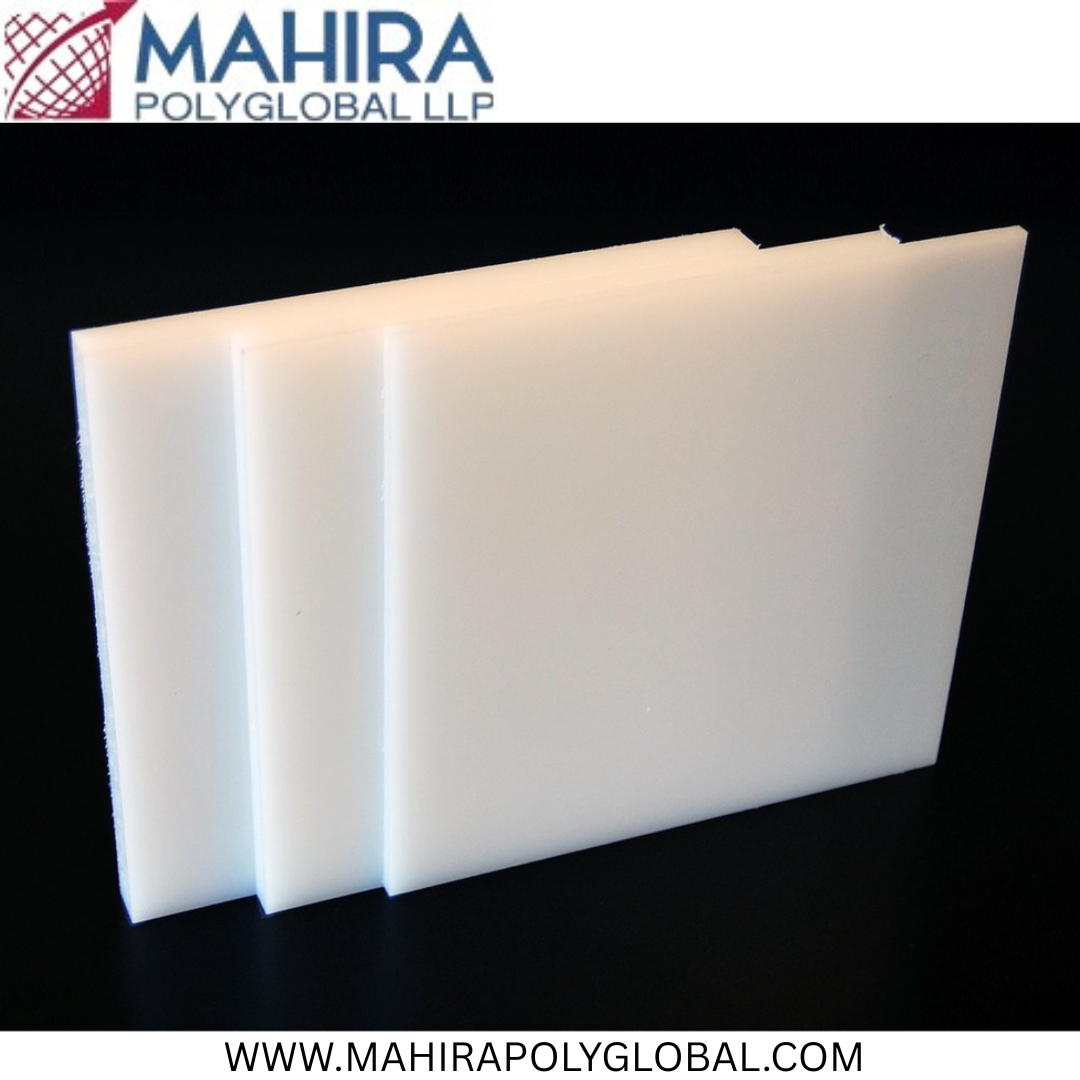
High-Density Polyethylene (HDPE) is one of the most powerful and widely used polymers that keep the pace with the rapidly changing field of material science and properties for industrial applications. Despite its often dull look, the performance of HDPE Sheets is what really makes them an essential tool for almost all industries. This wonder of the synthetic world, which is simply made from one monomer - ethylene, is the perfect blend of chemical stability, mechanical resilience, and cost-effective production, thus it is the ideal industrial polymer that has become the default choice. Its structure which is comprised of molecular chains with a very slight degree of branching is the reason why the material has higher strength and density than its Low-Density Polyethylene (LDPE) counterpart, and this is the direct way how the better performance is achieved in the real world.
The Genesis and Structural Superiority of High-Density Polyethylene
The creation of HDPE Sheets plastic involves polymerization of ethylene under controlled conditions using Ziegler-Natta catalysts or the Phillips process. This production accuracy leads to the formation of a mostly linear polymer chain which allows the molecules to tightly and densely come together. This close reconstruction is actually what results in the term High-Density Polyethylene for the material and is the reason that imparts the material its unique mechanical strength. The strength of HDPE plastic sheets is very much due to their molecular arrangement being highly ordered, in which the chain backbone runs mostly straight and uninterrupted, whereas other thermoplastics feature molecular branches that interfere with further organization. In other words, these materials have extremely good strength-to-density ratio. That is what the material is capable of being extremely firm and long-lasting yet at the same time very light in weight. It is this structural strength that provides the possibility for the transformation of this material into thick, strong sheets that can be used in situations of physical force and harsh environments, thus, a cheaper substitute of traditional heavier materials like metals or wood in structural and non-structural applications is made possible.
Unmatched Durability: The Core Industrial Advantage
Durability in an industrial context is measured not only by resistance to impact, but also by the capacity of the material to keep its structure when exposed to chemicals, moisture, and environmental factors for a long time. HDPE plastic sheets is the one that excels in this respect. The structure of the polymer makes it very resistant to almost any type of corrosive agents, such as most acids, alkalis, and solvents. This is why it is the best material for the inner lining of chemical tanks, the making of pipes for the transportation of hazardous waste, and the construction of parts that are used in processing plants and are in contact with aggressive substances. Besides, HDPE is almost completely impermeable to water, which is a feature that guarantees the material's dimensional stability even when it is submerged or used in a high-humidity environment. The elimination of moisture contributes to stopping rot, rust, and microbial growth, thus the material is distinctively different from organics. Moreover, the material is inherently resistant to wear and impact, thus its life span is further extended, the maintenance and replacement costs are lowered, which is very attractive to those industries that are looking for solutions with long-term prospects and low total cost of ownership (TCO).
Versatility in Application: From Food Contact to Marine Environments
The material's amazing versatility may be considered as its most important characteristic. Plastic HDPE Sheets are not one and the same; they can be produced in different grades, thicknesses, and surface finishing to meet the different functional demands. To illustrate, the food and beverage industry would not be able to function correctly without the FDA-compliant, cutting-board grade HDPE, which is non-toxic, odorless, and resistant to staining and bacterial absorption. This grade is not only easy to clean but is also knife blade friendly, thus it is the perfect surface for food preparation and the best choice for food processing equipment components. On the other hand, UV-stabilized grades are necessary for outdoor use sheets are very resistant to damage caused by the long-term exposure to the sun, thus they are irreplaceable in the production of the following: playground equipment, outdoor cabinetry, agricultural liners like pond and canal linings, and marine construction elements such as docks and bulkheads, where saltwater resistance and weathering are essential.
Fabrication and Machinability: A Manufacturer's Dream
From a manufacturing and fabrication perspective, Mahira Polyglobal LLP is extremely user-friendly. Being a thermoplastic, it can be easily cut, routed, drilled, and machined with the help of regular tools, hence the production of complex and precise components is possible. One of its great industrial advantages is its ability to be welded very well contrast to many plastics that need complex bonding agents, HDPE can be efficiently connected by thermal welding methods, such as butt welding or extrusion welding only. The capability to create seamless, leak-proof, and chemically resistant joints is very important in the case of large-scale containment vessels, industrial ductwork, and geomembrane liners construction for landfills and reservoirs. The comparatively simple fabrication process along with the material's lightweight characteristic greatly contribute to the installation and modification costs being lower than if traditional materials were used, consequently, project timelines are shortened, and engineers' and manufacturers' flexibility in terms of design is improved.
Conclusion
HDPE sheets are not just an ordinary kind of plastic; they are a fundamental industrial solution that came out of a simple yet beautifully designed polymer structure. Their perfect combination of high mechanical strength, chemical inertness, longevity, and being lightweight makes them a better option for heavy-duty as well as sensitive applications that are innumerable from the most challenging situations of chemical processing plants to the hygienic necessities of food-grade surfaces, the durability and versatility of HDPE plastic sheets have been a continuous source of innovation and efficiency to worldwide industries the demand for sustainable, cost-effective, and high-performance materials is on the rise, the importance of High-Density Polyethylene will be at the core of the future of manufacturing and engineering.
Frequently Asked Questions
Question: Who is the largest supplier of HDPE Sheets?
Answer: The leadership of the global market is not always the same and it is often changed, but Mahira Polyglobal LLP is a dependable and a key supplier that provides a diverse range of top-quality HDPE Sheets to meet different industrial needs.
Question: Who is the largest exporter of HDPE Sheets?
Answer: The global largest exporters of High-Density Polyethylene (HDPE) materials mainly depend on the volume of the trade. However, Mahira Polyglobal LLP is a notable exporter mainly because of its high-quality products and relatively easy global logistics.
Question: Who is the largest manufacturers of HDPE Sheets?
Answer: The worldwide top manufacturers are numerous, but in terms of quality and attention to customer's requirements, Mahira Polyglobal LLP is identified as a leading manufacturer of premium-grade HDPE Sheets.
Question: What are the primary applications of HDPE Sheets?
Answer: HDPE Sheets find their primary uses in areas needing such properties as being resistant to both acid and impact. For instance, the uses could be chemical tanks made of cutting boards, piping systems, or marine structures.
Question: Are HDPE Sheets recyclable?
Answer: Of course, High-Density Polyethylene (HDPE) is one of the most recyclable plastics which makes HDPE Sheets to be a green product in terms of material utilization across different industries.
Question: What is the main material used to produce HDPE Sheets?
Answer: The main material is high-density polyethylene resin. It is a thermoplastic polymer made from petroleum. The product is known for its high strength-to-density ratio.
Question: What is the typical lifespan of an HDPE Sheet?
Answer: The durability of HDPE sheets and their lifespan are quite remarkable. They can last for several decades without deteriorating even if exposed to harsh outdoor and chemical environments.
Question: Can HDPE Sheets be customized in terms of color and size?
Answer: Certainly, a manufacturer like Mahira Polyglobal LLP will usually have the option of tweaking the thickness, size, and color of the product to suit a customer's project or industry need.
Question: What is the benefit of using HDPE Sheets over other plastics?
Answer: HDPE is far the best plastic when it comes to its resistance to impact, acids, and water. Unlike many other plastics, it is also lightweight and yet very strong. What makes it amazing from a user point of view is also the fact that it is very cheap to use for a long period of time.
Question: How can I request a quote for bulk orders of HDPE Sheets?
Answer: To discuss the details and pricing of your bulk order requirements, you should courteously get in touch with the sales and customer support department at Mahira Polyglobal LLP.

 English
 Arabic
 French
 Spanish
 Portuguese
 Deutsch
 Turkish
 Dutch
Dutch
 Italiano
 Russian
 Romaian
 Portuguese (Brazil)