


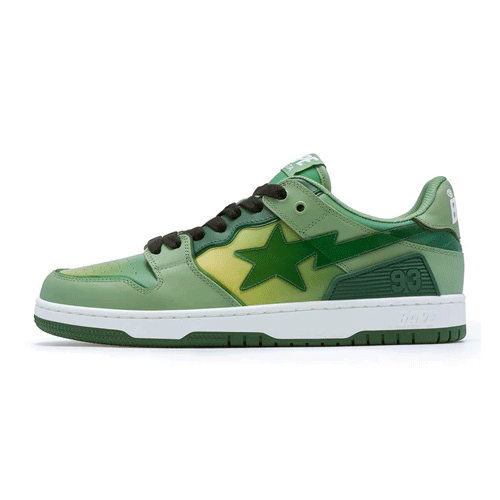
In the ever-evolving world of sneaker culture, few silhouettes have stood out quite like the Bapesta. Designed by Japanese streetwear pioneer A Bathing Ape (BAPE), the Bapesta isn't just a sneaker — it's a bold statement that merges art, rebellion, and fashion into one iconic product. Since its debut in the early 2000s, the Bapesta has remained one of the most recognizable and sought-after sneakers in streetwear history.
The Origins of Bapesta: A Japanese Take on Global Streetwear
To understand the Bapesta, we first have to understand the brand behind it. A Bathing Ape, founded by Nigo in 1993, quickly established itself as a leader in Japanese streetwear. Inspired by American pop culture, hip-hop, and the energy of Harajuku’s youth scene, BAPE became known for its loud prints, shark hoodies, and unique collaborations.
In 2002, BAPE launched the Bapesta, a sneaker that immediately caught attention for its bold silhouette and resemblance to the Nike Air Force 1. But while comparisons were inevitable, the Bapesta brought something entirely different to the table — a playful, rebellious spin that represented the heart of Harajuku fashion.
Design Language: The Star that Started It All
The Bapesta’s most iconic design element is the star-shaped logo, also called the "STA", which replaces Nike’s swoosh. This design choice was both a tribute to and a challenge against the dominant American sneaker culture. The Bapesta featured patent leather in bright, glossy colorways, unlike anything that had previously existed on the market.
Each pair felt like a work of pop art — vibrant, glossy, and unapologetically loud. From camo prints to color-blocked schemes and character collaborations, Bapesta quickly became more than just a shoe; it became a collectible, a fashion statement, and a form of self-expression.
Hip-Hop Embrace and Global Popularity
One of the biggest drivers of the Bapesta’s popularity was its embrace by hip-hop culture. Artists like Pharrell Williams, Kanye West, Lil Wayne, and Soulja Boy proudly wore Bapestas at a time when sneakers were starting to define status and individuality in hip-hop.
The music video for Soulja Boy’s “Crank That” famously called out Bapestas by name, catapulting the sneaker into the mainstream American consciousness. At a time when Nike, Adidas, and Reebok were dominating the scene, BAPE carved out a unique space with its bold Japanese aesthetic and celebrity endorsements.
Bapesta vs Air Force 1: Homage or Hype?
One of the most debated aspects of the Bapesta is its similarity to the Nike Air Force 1. To some, it was a rip-off; to others, it was an homage — a remix of a classic silhouette through the lens of Japanese fashion.
Nigo has never shied away from referencing American culture. In fact, BAPE as a brand thrives on remixing and reinterpreting icons of Western pop culture. The Bapesta was not about copying but about re-contextualizing a classic for a new, younger, edgier audience. The use of premium materials, eye-catching colors, and limited runs further differentiated it from its more mass-produced counterpart.
Today, the Bapesta is considered a cultural artifact. It speaks to a time when streetwear was transitioning from subculture to global phenomenon.
Collaborations That Made History
One of BAPE’s strengths lies in its ability to collaborate with a wide range of artists, brands, and characters. The Bapesta has been part of some of the most iconic sneaker collaborations in history.
From team-ups with Marvel, DC Comics, and Hello Kitty, to partnerships with musicians like Kanye West and Big Sean, each release brought a new layer of depth and collectibility to the Bapesta brand.
These collaborations weren’t just gimmicks — they were deeply rooted in the brand’s ethos of cross-cultural creativity. The fusion of Japanese design sensibility with Western pop culture icons kept the Bapesta fresh, relevant, and in high demand.
The Resurgence: Modern Bapesta and New Drops
After a period of quiet in the mid-2010s, the Bapesta has seen a strong resurgence in recent years. BAPE has modernized the silhouette, improved materials, and introduced limited-edition drops that cater to both new sneakerheads and OG collectors.
Collaborations with brands like Coach, Undefeated, and Mastermind Japan have reignited interest, while new marketing strategies have targeted Gen Z consumers via platforms like Instagram and TikTok.
The modern Bapesta stays true to its roots while embracing the design and tech expectations of today’s sneaker market. Its nostalgic appeal, combined with its streetwear credibility, makes it one of the most desirable shoes on the market again.
Bapesta Collectibility and Resale Culture
Like many iconic sneakers, Bapestas are now a hot commodity in the resale market. Limited releases and exclusive collaborations have driven prices up significantly, with some rare pairs selling for thousands of dollars.
Collectors see the Bapesta not only as a fashion statement but also as an investment piece. Platforms dedicated to sneaker resale regularly feature Bapesta drops, and their value continues to grow as sneaker culture cements itself in global fashion.
For those entering the game, purchasing a pair of Bapestas is more than just shopping — it’s about participating in a legacy of streetwear excellence.
Styling the Bapesta: How to Rock the Icon
The Bapesta is not a subtle shoe. It demands attention and should be styled accordingly. Most fashion-forward wearers pair Bapestas with baggy cargo pants, distressed denim, or wide-leg streetwear trousers. On top, think graphic tees, oversized hoodies, or classic BAPE shark hoodies for a cohesive look.
Color coordination is key when rocking Bapestas. With such bold colors and finishes, it's best to keep the rest of the outfit neutral — unless you're going for an all-out maximalist streetwear fit.
Why Bapesta Still Matters
In a world filled with countless sneaker drops, where trends come and go at lightning speed, the Bapesta remains relevant because it represents authenticity, heritage, and rebellion. It captures the moment when Japanese streetwear went global, and when sneakers stopped being just athletic gear and became cultural symbols.

 English
 Arabic
 French
 Spanish
 Portuguese
 Turkish
 Dutch
Dutch
 Italiano
 Russian
 Romaian
 Portuguese (Brazil)
 Tiếng Việt